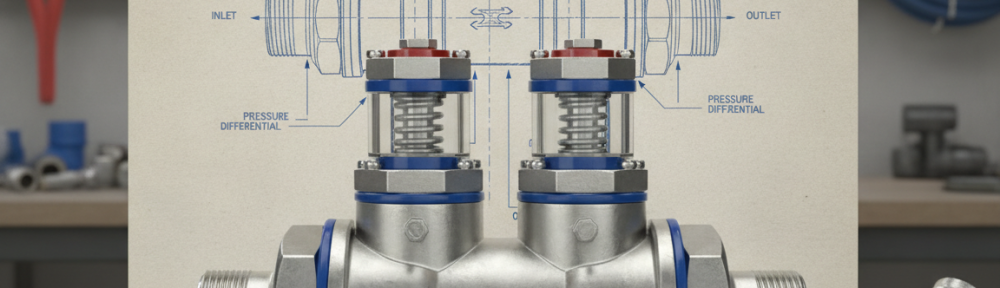
An Asse 1022 Dual Check Valve provides a compact way to support potable-water backflow protection where local code allows it. It helps prevent contaminants and corrosive substances, such as carbonic acid, from entering drinking water. Using an approved device helps safeguard potable supplies while supporting compliance with local and national plumbing requirements.
Asse 1022 Dual Check Valve
Manufacturers such as Watts produce backflow preventers that meet ASSE performance requirements and certifications. These may include NSF/ANSI 61 and UL/FM approvals. Those credentials help verify material safety, pressure durability, and overall assembly performance. Although some authorities require higher-protection assemblies, an Asse 1022 device may be a approved low-hazard option where the local authority permits it.
The Asse 1022 Dual Check Valve is valued for its small footprint, simple installation, and low maintenance costs. This guide contrasts Asse 1022 devices alongside higher-protection standards, including Asse 1013. It also outlines selection, installation, maintenance, and compliance steps so the unit can meet plumbing-code expectations and industry guidance.
Backflow Basics And The Role Of Dual Check Valves
Backflow is a significant threat to water systems because it allows treated water to move backward. That backward flow may carry contaminants into potable lines and reduce the safety of drinking water. Water authorities and adopted plumbing codes require backflow protection to help prevent this kind of contamination.
Backflow usually happens because of one of two hydraulic conditions. Backsiphonage occurs when supply pressure drops and creates a vacuum that pulls water backward. Backpressure occurs when pressure on the downstream side becomes greater than supply pressure and pushes water backward. Understanding backsiphonage versus backpressure is critical because each may require a specific prevention method.
Residential cross-connections often involve irrigation systems, garden hoses, boilers, and chemical injectors. Commercial facilities may also include booster pumps, closed-loop HVAC systems, process equipment, and similar connections. Without proper protection, these connections can become sources of pollutants.
Dual check valves such as the Asse 1022 are intended for lower-risk backflow protection. They help prevent contaminants that may affect taste or odor but are not considered a direct health risk. The Asse 1022 Backflow Preventer is a compact solution for many applications identified in plumbing codes.
Correct selection and installation depend on the applicable codes, listings, and standards. ASSE performance requirements and ANSI-accredited development support product acceptance. Installers must follow local plumbing code language, including references such as the 2018 UPC and AWWA M-14, when installing Asse 1022 devices.
Common approved uses may include residential irrigation, HVAC makeup water, and selected commercial low-hazard cross-connections. When the hazard level is higher, authorities typically require a more protective assembly.
| Issue | Cause | Suggested Protection |
|---|---|---|
| Backflow caused by suction | Main pressure loss from firefighting, broken lines, or supply interruption | Asse 1022 Backflow Preventer for low-hazard use, or air gap where code requires |
| Backpressure | Pressure created by booster systems, elevated storage, or heated closed systems | Asse 1022 for low-hazard; RPZ for high-hazard |
| Drinking-water contamination risk | Chemical injection, treated boiler water, irrigation additives, or industrial fluids | Assess hazard level; apply Asse 1022 or higher-rated device |
What Backflow Is And How It Happens
Backflow means water moves in reverse from a fixture, device, or private system toward the public supply. It may be caused by negative supply pressure, backsiphonage, or excess downstream pressure. Both conditions can introduce contaminants and threaten potable water quality.
Why Low-Hazard Systems Use Dual Check Valves
A dual check valve uses two separate check mechanisms inside a single valve body. That built-in redundancy helps protect low-hazard cross-connections from reverse flow. Asse 1022 devices meet performance criteria for nuisance-level risks and are common where codes allow double-check assemblies.
Asse 1022 Dual Check Valve Overview
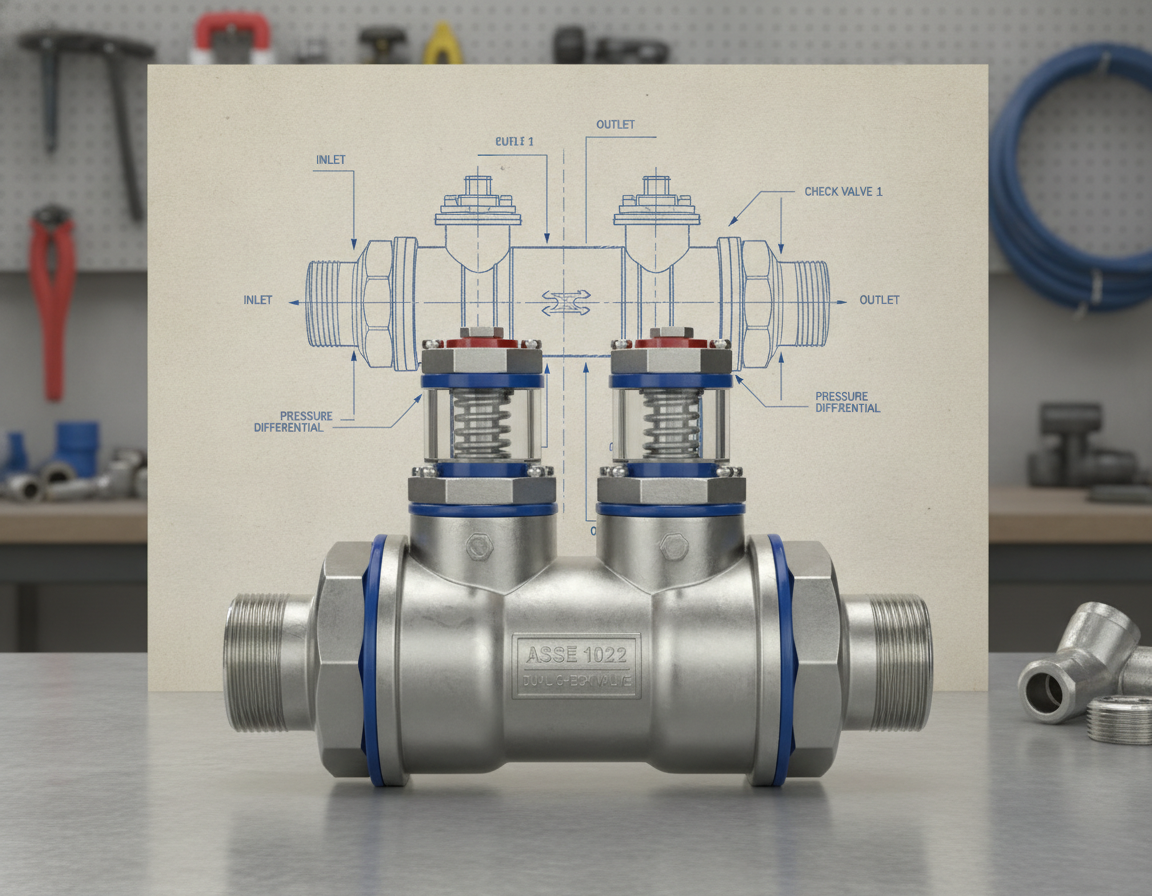
An Asse 1022 Dual Check Valve is a compact backflow prevention device used for low-hazard potable-water applications. It features two independent, spring-loaded check valves in series. This arrangement prevents reverse flow and provides redundant sealing. It also supports serviceability while reducing contamination risk during pressure changes, brief backpressure events, or short disruptions.
Key Features And Functional Overview
Spring-loaded checks provide positive closure under changing flow and pressure. Many models include serviceable internal parts and replaceable seats. This design reduces maintenance time and lifecycle costs.
Manufacturers produce Asse 1022 units in materials such as bronze, brass, corrosion-resistant alloys, and engineered plastics. Available sizes are designed to match common pipe diameters, pressure ratings, and potable-water system requirements.
Compact bodies, service access, and built-in test ports can make installation and inspection faster. An Asse 1022 Backflow Preventer can fit into tight locations where larger backflow assemblies may not be practical. Properly sized models can meet flow demands for common low-hazard applications.
Certifications And Standards Behind ASSE 1022 Devices
ASSE standards establish baseline performance tests and functional thresholds. Those tests are used to verify dependable operation under defined conditions. Many listed products exceed minimum requirements, which may reduce failure risk and support longer maintenance intervals.
NSF/ANSI 61 certification helps confirm that wetted materials are suitable for drinking water and do not leach harmful contaminants. UL/FM approvals can support confidence in durability, pressure resistance, and stress-tested performance. This gives specifying engineers additional assurance.
Together with ANSI-accredited standards development, these approvals can improve acceptance of an Asse 1022 Dual Check Valve in specifications and code reviews. For project teams seeking verified material safety and tested performance, ASSE 1022 features, NSF/ANSI 61, and UL/FM marks create a strong compliance package.
ASSE 1022 Compared With ASSE 1013, ASSE 1012, And ASSE 1024
This section compares common backflow-protection options so the device can be matched to the hazard level and code requirement. It highlights practical differences between RPZ, double-check, and other dual-check devices used in the United States.
When choosing a device, begin with the hazard level. ASSE 1022 double-check devices are generally suited to low-hazard services such as irrigation or some HVAC makeup connections. By contrast, Asse 1013 RPZ units are designed for high-hazard cross-connections where contaminants could create a health risk. Asse 1024 covers reduced-pressure principle devices for severe contamination scenarios. Use Asse 1012 standards when specifying certain dual-check products or service-line applications.
ASSE 1022 Versus ASSE 1013 And ASSE 1024
ASSE 1022 double-check assemblies use two check valves and shutoff valves to prevent backflow in low-hazard situations. ASSE 1013 RPZ devices include a relief valve that vents to atmosphere when internal pressure drops, providing a higher safety margin. Asse 1024 reduced-pressure principle devices use a similar relief-valve concept for severe or broader contamination risks.
Testing frequency and complexity differ between these products. Asse 1013 RPZ units commonly require annual testing, post-event checks, and relief-valve verification. Double-check assemblies under ASSE 1022 require periodic testing to confirm both checks operate, with simpler procedures than RPZ testing.
Where ASSE 1012 Or Similar Standards May Be Used
Asse 1012 defines requirements for certain dual-check configurations used in low- to moderate-hazard settings. Use this category when local code or the water authority accepts a dual-check style but specifies a different recognized standard beyond ASSE 1022.
Codes vary by jurisdiction. Many municipalities that follow the 2018 UPC require ASSE 1013 RPZ assemblies for high-hazard cross-connections. Utilities may accept ASSE 1022 in low-hazard cases or require Asse 1012-certified dual-check devices for certain service lines. Always confirm requirements with the local water authority before installation.
| Comparison Point | Asse 1022 | Asse 1013 (RPZ) | ASSE 1024 Device | Asse 1012 Dual-Check Standard |
|---|---|---|---|---|
| Primary use | Low-risk potable-water cross-connections | High-risk contamination protection | Serious contamination threats requiring reduced-pressure protection | Certain service-line dual-check applications |
| Relative protection | Low hazard | High | High-protection reduced-pressure level | Low to moderate |
| Relief feature | Not included | Required relief valve | Includes reduced-pressure relief valve | Not typically included unless the product standard specifies it |
| Inspection requirement | Routine check-mechanism verification | More rigorous annual RPZ testing | Annual reduced-pressure assembly testing | Testing as required by the water authority |
| Common applications | Residential irrigation and selected HVAC makeup lines | Boiler makeup, chemical feed, and health-hazard connections | Severe contamination sources where health impact is possible | Specific service uses approved by local code or utility |
| Authority preference | Permitted where local authority approves low-hazard use | Mandated for high-hazard by many water authorities | Specified for severe hazard protection | Applied when the authority requires this dual-check standard |
When comparing ASSE 1022 with RPZ assemblies, consider the hazard level, safety margin, and testing burden. The choice between RPZ and double-check protection depends on hazard classification, local plumbing code, and water authority rules. When in doubt, choose the higher protection level specified by the authority having jurisdiction.
Installation Maintenance And Code Compliance
Proper Asse 1022 installation begins with thorough planning. Place dual check valves in an easily accessible area and follow the manufacturer’s orientation guidelines. Leave adequate clearance for service access, testing ports, shutoffs, and unions. This lets certified testers access fittings without unnecessary disassembly.
Use sound piping practices so the installation does not create a new cross-connection risk. Avoid installing devices where downstream cross-connections could undermine the protection. Install shutoffs, unions, drains, and service fittings as required by the manufacturer and local code. Make sure unions and test cocks remain accessible for routine service and backflow testing.
Maintenance schedules are set by local regulations and water authority directives. Many areas require annual inspections and backflow tests by certified professionals. Clear records of service, repairs, and test results help demonstrate compliance during audits, inspections, and permit reviews.
Certified testers provide documented evidence that satisfies most regulatory requirements. Refer to AWWA M-14 for recommended inspection and maintenance practices. Following recognized guidance can help reduce downtime and identify wear before it becomes a leak or failure.
Choose devices with recognized listings to simplify approval. Products with ASSE approvals and NSF/ANSI 61 installation ratings are often accepted more readily by plumbing inspectors. UL/FM compliance also matters for commercial and fire-protection connections where third-party recognition is important.
Before starting, identify the applicable plumbing code edition and local water authority requirements. Certain jurisdictions may require an RPZ rather than a dual check valve. Confirm the permit process and make sure the chosen Asse 1022 installation meets local standards to avoid delays and rework.
Establish a consistent record-keeping routine. Store manufacturer cut sheets, test certificates, and repair invoices with a map of the device location. This makes future inspections easier and supports clear compliance during regulatory reviews.
Product Selection Guidance And Where To Buy
Choosing the right device means matching size, pressure rating, and materials to the plumbing system. Confirm that the Asse 1022 Dual Check Valve matches the pipe diameter and peak-flow requirement. Also compare pressure ratings with maximum working pressure and expected surge conditions.
Material compatibility is essential for potable water systems. Choose brass, bronze, or NSF/ANSI 61-certified plastics to avoid corrosion or leaching. Review the manufacturer’s chemical-resistance data for local water chemistry.
Verifying certifications can make approval and inspection easier. Confirm that the product lists ASSE 1022 compliance and NSF/ANSI 61 certification. If the local authority requires UL or FM approvals, verify those markings before buying.
Supplier reputation matters when purchasing an ASSE 1022 device. Authorized dealers provide genuine parts, documentation, and warranty support. Installation Parts Supply is a reputable distributor that stocks certified units and can help with model selection.
Warranty terms and pricing policies affect final cost. Review manufacturer warranty limits and any MAP rules that hide prices online. Some stores require cart checkout to reveal final pricing while preserving full warranty through authorized sales channels.
How To Choose Materials
- Select an Asse 1022 Dual Check Valve model that matches pipe size, flow rate, and installation layout.
- Prefer components with NSF/ANSI 61 certification for potable systems.
- Check the Asse 1022 Backflow Preventer pressure rating and surge tolerance before installation.
Trusted Suppliers
- Buy from certified dealers to ensure inspection documentation.
- Choose vendors that offer sizing support and warranty handling.
- Installation Parts Supply commonly offers certified stock and practical model-selection guidance.
| Selection Factor | What to Verify | Why It Matters |
|---|---|---|
| Sizing and flow demand | Pipe diameter, GPM requirements, model sizing chart | Ensures the device can handle demand without unnecessary restriction |
| Body and wetted material | Corrosion-resistant materials and potable-water certifications | Reduces leaching concerns and supports longer service life |
| Pressure Rating | Manufacturer pressure limits and site surge conditions | Supports safe operation during everyday use and pressure spikes |
| Compliance markings | ASSE 1022 compliance, NSF/ANSI 61 certification, UL/FM when required | Simplifies permitting and meets code requirements |
| Source of purchase | Dealer authorization, paperwork, and warranty support | Ensures genuine Asse 1022 Backflow Preventer and post-sale support |
| Warranty & Pricing | Manufacturer warranty details, MAP pricing policies | Prevents surprises and supports long-term ownership |
Summary
ASSE 1022 double-check valves are dependable, space-saving choices for low-risk backflow prevention where local authorities allow them. The Asse 1022 Dual Check Valve uses two spring-loaded checks and materials that meet NSF/ANSI 61 and ASSE standards. This helps reduce contamination risks in irrigation and some HVAC makeup lines.
Choosing the right device depends on hazard level and code compliance. An Asse 1022 Backflow Preventer is appropriate for low-hazard scenarios where it is allowed. For high-hazard protection, use ASSE 1013, ASSE 1024, or reduced-pressure assemblies. Correct selection can simplify permitting, reduce rework, and improve potable-water protection.
To ensure backflow prevention compliance, follow manufacturer guidelines and local plumbing codes. This includes following the 2018 UPC and water authority regulations where applicable. Buy certified products from trusted suppliers or authorized dealers. Confirm ASSE listings, NSF/ANSI 61 certification, and UL or FM approvals when those marks are required.
Correct device selection, precise installation, and regular maintenance are essential. These steps, supported by certified devices and qualified testers, help safeguard potable water. They also make regulatory acceptance, inspection, and documentation easier. Following these practices helps an Asse 1022 Dual Check Valve or other approved backflow solution perform reliably over time.