Exploring the Custom Engineered Solutions Provided by Oetiker Inc

For hose connections that need a dependable seal, Stepless Ear Clamps are a reliable fastening choice. Because the band is continuous and step-free, pressure is distributed more evenly around the hose. Compared with many traditional clamp styles, this design helps reduce pressure points, hose distortion, and leak potential.


Stepless Ear Clamps are common in automotive, manufacturing, and marine hose assemblies where a dependable seal matters. They are also important in plumbing, PEX tubing installations, and home workshop projects. Many models use stainless steel construction, and Group 167 Stepless® clamps commonly feature a 7 mm band width to help provide consistent compression.

Oetiker Inc. is a well-known manufacturer of Oetiker Clamp products, including the Stepless® family. Many Oetiker® Group 167 stepless ear clamps are packaged in 100-piece quantities for convenient ordering. For instance, Oetiker® 16705828, suitable for 1.547″–1.673″ / 39.3 mm–42.5 mm diameters, is packaged 100 per bag. With each bag weighing about 4 lbs, buyers can more easily plan storage, shipping, and inventory control.

Why Stepless Ear Clamps Work Well For Hose Fittings

Stepless Ear Clamps provide a straightforward, dependable solution for hose connections. The continuous band helps apply even compression around the full hose circumference. By reducing localized stress, the clamp helps protect the hose and maintain a more durable seal.

Leak Prevention Through Uniform Compression

Even radial pressure is critical for preventing leaks. Unlike some worm-gear clamps, Stepless Ear Clamps help avoid pressure gaps and uneven compression. Engineers frequently specify Oetiker Clamp products for their consistent clamping force, which is critical for PEX, coolant, or fuel lines.

Durability And Corrosion Resistance

Stainless steel construction provides robust corrosion resistance in harsh environments. Automotive, marine, and industrial systems depend on the durability of quality Stepless Ear Clamps. Certain models may align with ASTM-related plumbing or PEX requirements, supporting reliable long-term service where specifications apply.

Reduced Hose Damage And Burr-Free Edges

A narrow band and smooth, burr-free edges help reduce rubbing, cutting, and abrasion during use. A burr-free Oetiker Clamp can hold flexible tubing securely without aggressively cutting into the hose surface. This combination lowers the risk of hose failure and helps improve its service life.

Oetiker Clamps

Clamp Feature Benefit Frequent Use
Consistent clamping pressure Balanced pressure with fewer potential leak paths Fuel lines, coolant hoses, PEX tubing
Corrosion resistant Long service life in wet or salty environments Boat systems, outdoor machinery, and wet-area fittings
Smooth clamp edges Reduced cutting, rubbing, and hose damage Flexible hoses, rubber and PEX tubing
Step-free ear clamps Step-free band design for steady retention Applications requiring reliable hose retention
Oetiker-style clamp Trusted clamp engineering for repeated installations Factory assembly and repair work

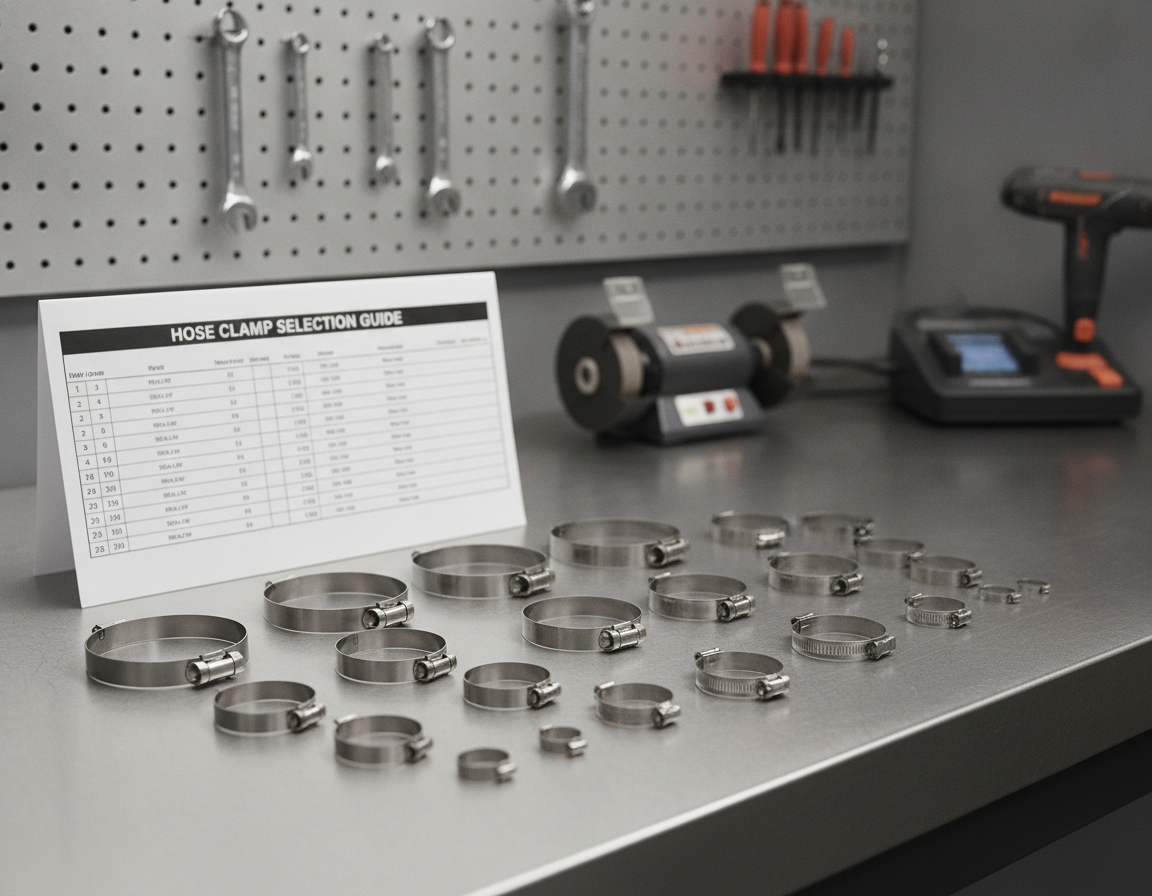
How To Choose A Stepless Ear Clamp Using A Pinch Clamp Size Chart

The correct clamp selection begins by measuring the assembled hose carefully and comparing the result with a Pinch Clamp Size Chart. Proper Stepless Ear Clamp selection helps prevent leaks, limits hose damage, and improves service longevity. The following steps help narrow the size range and improve the chance of a secure, long-lasting fit.

Measure the hose outside diameter only after the fitting has been fully seated inside the hose. Write down the assembled outside diameter in either inches, millimeters, or both. For best results, choose a clamp range that places the measured hose O.D. near the middle of the listed range.

The 167 Series Stepless® Ear Clamps provide a prime example. For a listed range such as 1.547″–1.673″ (39.3mm–42.5mm), the measured assembled O.D. should ideally fall near the center of that range. That sizing approach helps avoid clamps that are too loose or too aggressively compressed.

Interpreting a Pinch Clamp Size Chart means examining minimum and maximum closure diameters and aligning series details with your application. Consider ear width, band width, and band thickness to ensure mechanical fit and force distribution.

The chart should be used to compare the clamp’s ear width, band width, and band thickness before ordering. For instance, the 167 Series Stepless® Ear Clamps have ear width of 10.0mm, band width of 7mm, and band thickness of 0.6mm. The clamp ear should reduce by at least 40% during crimping so adequate clamping force is achieved.

Material and specification choices influence longevity and compliance. Stainless steel is often chosen for its corrosion resistance and durability. When plumbing or PEX standards apply, confirm the specification and verify the manufacturer SKU before purchasing.

Before making a purchase, consider packaging and ordering details. Many Stepless Ear Clamps are sold in 100-piece bags. Make sure the Oetiker Inc. part number and supplier listing match the quantity, material, range, and band width you need.

Best Installation Practices For Long-Term Clamp Reliability

Proper installation is critical to a hose assembly’s longevity. Follow safe installation steps for Stepless Ear Clamp, use the right tools, and plan quantities to avoid delays in maintenance or production.

Proper Clamping Procedure

Begin by fully inserting the fitting into the hose. Position the clamp so the ear is accessible. A dedicated ear clamping tool helps crimp the ear without twisting, distorting, or damaging the band. With dual-ear designs, crimp one ear and then the other so compression remains even around the hose.

Target ear deformation should produce clamp ears reduction of at least 40 percent. A properly sized clamp will not force the ear to fully close. After installation, inspect the band, hose, and fitting for even contact, visible gaps, cuts, or other damage.

Recommended Tools And Safety Tips

Use purpose-built crimping tools sized for your clamp series to ensure correct deformation without nicking the hose. Oetiker® ear clamping tools are often used in professional workshops because they help produce repeatable crimps.

When crimping clamps, wear gloves and eye protection to reduce risk from slips, edges, or metal fragments. Avoid improvised tools that create uneven crimps or sharp edges. For repeated production work, bench-mounted or powered crimpers can improve consistency and reduce operator fatigue.

Quantity And Packaging Notes For Buyers

Many industrial suppliers package Stepless Ear Clamps in 100-piece bags. Purchasing by the bag helps maintain inventory for repairs, maintenance, assembly work, and production runs.

Check bag weight and SKU before ordering to confirm size range and material. Installation Parts Supply offers common clamp sizes and related tools; verify part numbers and order spare clamps to cover rework or replacements.

Product Item Usual Package Approximate Bag Weight Notes For Buyers
Stepless Ear Clamp, small 100-piece bag ~2 lb Confirm O.D. range and material; keep spares for repairs
Medium-size stepless clamp 100 per bag approximately 3 lb Order by bag quantity to match production schedules
Stepless Ear Clamp, large Bag of 100 ~4 lb Confirm SKU, size range, and ear reduction requirement
Ear clamp installation tool single tool per box approximately 1.5 lb Select a tool matched to the clamp series for consistent crimping

Trusted Brands And Buying Sources For Oetiker Clamp Products

When dependable hose clamps are required, supplier selection matters almost as much as clamp selection. Reputable brands and detailed product information are essential for technicians. Good supplier information helps confirm that the clamp meets the required performance, material, and compliance expectations. Before ordering, review supplier resources for size range, material, packaging quantity, and manufacturer part number.

Oetiker Inc. is strongly associated with stepless clamps used across plumbing, industrial, automotive, and maintenance applications. Many Stepless® Ear Clamps use stainless steel construction with specifications such as a 7mm band width and 0.6mm band thickness. For instance, the Oetiker 16705828 Stepless® Ear Clamp has a range of 1.547″–1.673″ (39.3mm–42.5mm), often sold in bags of 100.

Oetiker Inc. Clamp Product Highlights

Oetiker Clamp products are known for uniform compression and corrosion resistance. They also have burr-free edges, protecting PEX tubing and other hoses. Standard packaging includes part number, clamp range, and bag quantity, making ordering and inventory checks straightforward.

How To Compare Clamp Suppliers

When comparing suppliers, verify manufacturer authenticity and material specifications. Ensure stainless steel grade, band width, ear width, and band thickness match your needs. Cross-check part numbers and packaging counts for compatibility.

Assess supplier services for accurate product information and availability of a pinch clamp size chart. Clear measuring instructions and proper crimping tools help reduce sizing and installation errors. Consider lead times, shipping costs, and minimum order quantities. For estimating shipping, a 100-piece bag may weigh about 4 lbs depending on clamp size and series.

Buy Online From Installation Parts Supply

Installation Parts Supply carries clamps, fittings, and tools suited to contractors, maintenance teams, and repair shops. Before completing an online order, confirm the clamp series, diameter range, material, bag quantity, and tool compatibility. Product pages and size charts should be used together to reduce the chance of selecting the wrong clamp.

Request technical data or specifications from the supplier for code compliance or warranty documentation. Detailed product pages and responsive customer support help prevent ordering the wrong size, chart reference, or Oetiker Clamp series.

Stepless Ear Clamp Conclusion

Stepless Ear Clamps provide significant advantages for those requiring dependable hose fittings. Their uniform compression helps reduce leaks, hose damage, and uneven stress around the fitting. This is true across various sectors, including automotive, marine, industrial, plumbing, and PEX applications. The use of stainless steel in Oetiker Clamps supports long-lasting corrosion resistance and consistent performance.

For buyers and installers, the most important steps are easy to summarize. Measure the assembled hose outside diameter accurately before choosing a clamp. It’s also important to refer to a pinch clamp size chart and choose a clamp with a range that matches the O.D. Proper use of an ear clamping tool is necessary to achieve at least 40% ear reduction. That crimping target helps produce the intended clamping force and sealing performance.

When making a purchase, focus on verified specifications like band thickness and ear width. Many prefer Oetiker Inc. Stepless® Ear Clamps, such as Group 167 with a 7mm band width. These clamps are commonly available in bulk packaging, often 100 per bag. Reputable distributors, including Installation Parts Supply, offer product listings, size chart resources, and accessories. They support proper selection and installation for U.S.-based customers.

Related: Why Oetiker Ear Clamps are Trusted in the Food Industry

RTV 4500 for O-Ring Fabrication

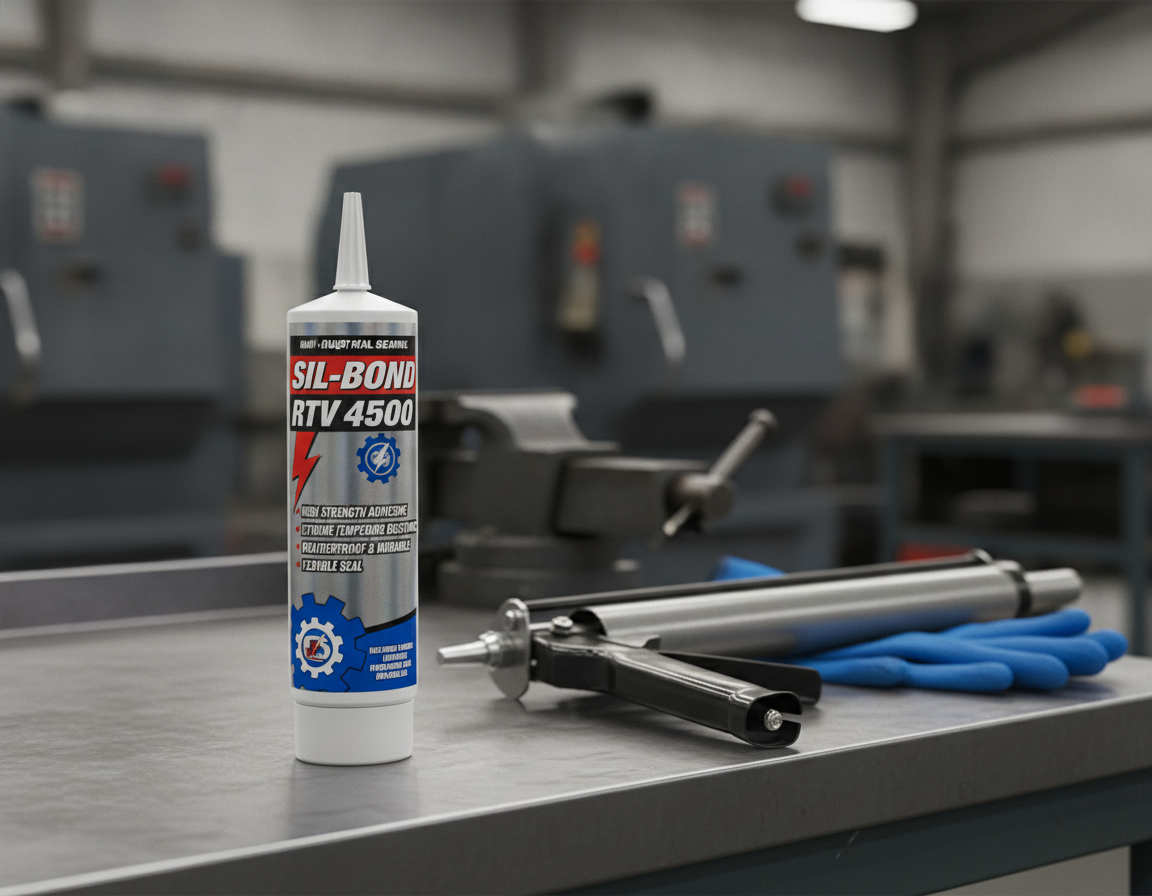
RTV 4500 Silicone is a one-component, room temperature vulcanizing acetoxy-cure sealant engineered for tough industrial and construction tasks. It creates durable, waterproof, and airtight bonds, useful in roofing, marine, and HVAC applications. Because of that, it is often selected by users who need dependable sealing performance.

Its weather-resistant and non-yellowing properties help it retain both appearance and performance in outdoor conditions. RTV 4500 satisfies many green building standards and regulatory approvals, making it a favorite among contractors and facilities teams.

In the U.S., RTV 4500 is identified by several names, including Sil-Bond RTV 4500, Silco RTV 4500, Sil Bond, and RTV4500. Installation Parts Supply (https://installationpartssupply.com) supplies industrial-grade sealants, plumbing supplies, and related trade products. They cater to contractors, plumbers, HVAC technicians, and more across the U.S.

RTV 4500 Silicone is especially useful for contractors, plumbers, HVAC technicians, marine technicians, precast concrete fabricators, roofing crews, appliance manufacturers, and facilities maintenance teams. This article will examine its durability, adhesion strength, regulatory approvals, and compatibility with various substrates.

Silco RTV 4500

  • RTV 4500 Silicone is a single-component acetoxy-cure sealant made for industrial applications.
  • It provides waterproof, airtight bonds with UV stability and non-yellowing properties.
  • Common U.S. trade names include Sil-Bond RTV 4500, Silco RTV 4500, and Sil Bond.
  • Installation Parts Supply is a U.S. source for industrial-grade RTV4500 and related products.
  • Typical users: contractors, plumbers, HVAC and marine technicians, and facilities teams.

Understanding RTV 4500 Silicone And Sil-Bond RTV 4500

Sil-Bond RTV 4500 is a one-part acetoxy-cure silicone sealant built for industrial-grade bonding and sealing. It is marketed under several names, including Sil-Bond RTV 4500, Sil Bond, and references to Silbond Corp or Silco RTV 4500. This product is listed alongside similar RTV formulas in distributor catalogs. It is often found in Senta 100% RTV Silicone and other RTV 4500 variants, available in multiple SKUs and packaging formats.

Its acetoxy-cure chemistry enables the compound to cure at room temperature while releasing acetic acid. This process delivers fast tack and strong initial adhesion but requires caution on acid-sensitive substrates. Many U.S. vendors and specialty distributors, including Installation Parts Supply and similar online shops, commonly stock this High Strength Silicone Sealant for trade and industrial buyers.

Important specifications list the product under ASTM C920 Type S, Grade NS, Class 25, along with federal and military standards such as TT-S-00230C, TT-S-01543A, and MIL-A-46106A. It also carries regulatory and safety credentials, including FDA CFR 177.2600 compliance, USDA acceptance, NSF 51 recognition as an NSF Approved Silicone Sealant for indirect food contact, and UL Recognized Component status. The formulation is VOC-compliant to meet green building and low-emission project requirements.

Each approval affects a practical use case. ASTM C920 sets elastomeric sealant performance and classification for joint movement. NSF 51 helps qualify applications in food equipment contexts where indirect contact is possible. MIL-A-46106A and TT-S standards show suitability for federal and military installations that require strict material performance.

Feature Specification / Approval Field Impact
Movement capability ASTM C920 Type S, Grade NS, Class 25 Accepts ±25% joint movement for glazing and expansion joints
Government specification Military and federal sealant standards Supports strict durability requirements for defense and federal work
Food contact FDA CFR 177.2600, USDA, NSF 51 Supports indirect food-contact and sanitary-equipment applications
Outdoor durability UV Stable RTV 4500 and Non-Shrinking Silicone behavior Helps resist yellowing, shrinkage, and exterior weathering
Green building suitability VOC-compliant formulation Helps meet low-VOC specification needs
Sealant type RTV 4500 Silicone, Sil-Bond RTV 4500 Ready-to-use acetoxy formula with quick surface cure

Product literature emphasizes a range of features: non-flammable composition, waterproof seals, excellent adhesion to common substrates, Non-Shrinking Silicone behavior, High Strength Silicone Sealant bonding, outstanding weatherability, and UV Stable RTV 4500 resistance. The combination creates durable seals in interior and exterior settings with minimal maintenance.

These features create clear benefits for contractors and specifiers. Users can benefit from reliable adhesion on metal, glass, ceramics, and many plastics, with less shrinkage-related joint failure and longer service life where UV and weather exposure matter. NSF Approved Silicone Sealant status, along with FDA and USDA recognitions, allows sanitary and food-adjacent uses while maintaining industrial-grade performance.

Common applications driven by these properties include sealing and glazing, HVAC/R gasketing, plumbing joints, roofing penetrations, countertop and kitchen seals, appliance trim, transportation sealing, and marine cabin work. Choosing Sil Bond or related RTV 4500 Silicone products can limit maintenance cycles and support long-term protection in demanding environments.

Industrial Applications And Performance Of RTV 4500 Silicone

RTV 4500 silicone is engineered for heavy-duty sealing in various sectors. This includes construction, transportation, marine, food service, and HVAC/R. It performs well in these areas, making it a top choice for long-term projects. The sections below examine substrate compatibility, typical uses, and environmental durability. This information is useful for installers and engineers.

Substrate compatibility and adhesion performance

RTV 4500 is compatible with a wide range of substrates. These include metal, steel, tile, fiberglass, ceramic, glass, aluminum, painted surfaces, wood, plywood, marble, and precast concrete. It develops strong bonds on both porous and non-porous surfaces. Once cured, it delivers waterproof and airtight joints.

The sealant uses an acetoxy cure, supporting strong adhesion on most substrates. However, reactive metals and moisture-sensitive materials may need testing before full use. For critical work, prepare test coupons and follow the manufacturer’s preparation instructions before committing to the full application.

Common industrial and commercial uses

RTV 4500 has a broad range of applications. It is used for precast concrete joint sealing, transportation seals, and marine cabins. It is also used in appliance trim, interior and exterior sealing, above-grade glazing, HVAC/R gasketing, plumbing joints, roofing repairs, kitchen and bath seals, countertops, and sanitary seals.

In HVAC/R, it is used for gasketing and sealing ducts and housings. Plumbers use it for joints and fixture seals that resist moisture. Marine builders may choose it for cabin joinery, weather seals, and exposed joints. Appliance manufacturers may use Sil Bond RTV 4500 to seal trim components, panels, and related assemblies.

Environmental durability and service life

RTV 4500 weatherability is one of its key strengths for outdoor or exposed applications. It shows excellent weatherability, UV stable performance, and non-yellowing characteristics. That helps preserve both appearance and seal integrity over time. Its waterproof nature reduces water ingress and protects underlying substrates.

The sealant is designed for all-weather use and can support green-building criteria in exterior applications. Its non-shrinking behavior supports joint integrity over long service periods. For critical seals in harsh environments, regular inspections are important so wear can be found before failure occurs.

NSF Approved Silicone Sealant designations increase commercial options. With NSF 51 and FDA CFR 177.2600 references, it can fit selected food-equipment and indirect food-contact applications. This allows wider use in food service and processing installations where sanitary performance matters.

Technical Data, Packaging, And Customization Options

The following section summarizes key technical and supply information for RTV 4500 products. The short notes explain color choices, container sizes, private labeling options, and safety guidance. This assists procurement and project teams plan orders and storage.

Available Colors And Packaging Sizes

Standard RTV 4500 color options generally include clear, white, black, and aluminum. For specialty projects, manufacturers may also offer custom colors such as almond and bronze.

RTV 4500 packaging ranges from retail tubes to contractor bulk cartons. Typical container types and case quantities include 24PK retail packs, 960P wholesale cartons, and 1920PK bulk cases. Single-unit SKUs such as SS-CLR SKU 20.27740 can be used for quick replacement or small-order needs.

Private Labeling, Customization, And Color Matching

Producers support services to Customize RTV 4500 for OEMs and distributors. They provide custom colors, proprietary labeling, and tailored pack sizes to fit market channels.

Private labeling RTV 4500 may be available through separate SKUs and package configurations. Senta RTV packaging uses SS-CLR, SS-WHT, and SS-TLC series naming for easier ordering and inventory tracking. Contact suppliers to confirm MOQ, production lead times, and sample approval steps for RTV 4500 color matching to project-specific standards.

Distributors like Installation Parts Supply assist with customized procurement. They coordinate custom packaging, private label rollouts, and logistics for large-volume buys.

Regulatory, Safety, And Material Handling Guidance

RTV 4500 meets standards and approvals such as ASTM C920, TT-S classifications, MIL-A-46106A, FDA CFR 177.2600, USDA acceptance, NSF 51, and UL Recognized Component status. These credentials can support use in food-adjacent and regulated installations when the correct SKU is selected.

Users must account for acetoxy cure safety. Acetoxy-cure silicone releases acetic acid during curing. Provide adequate ventilation, test moisture-sensitive substrates before use, and verify compatibility with finished metals before application.

For safe handling, follow SDS guidance and wear appropriate PPE such as gloves and eye protection. Store the sealant in dry conditions. Follow local VOC rules along with the manufacturer’s disposal and first-aid guidance. Before use, read the technical data sheet and safety data sheet to confirm NSF Approved Silicone Sealant handling requirements and overall RTV 4500 safety for the application.

Buying, Distribution, And Installation Considerations

Buying RTV 4500 and related Sil-Bond products benefits from a clear sourcing plan. These items are accessible from manufacturers, industrial distributors, and online stores. Installation Parts Supply RTV 4500 can list stock availability and ordering options for plumbing, trade, and industrial applications. It is necessary to confirm compliance with ASTM, NSF, or MIL standards with your Sil Bond supplier before making a purchase.

Volume purchases need attention to SKU parity. Suppliers such as Senta may offer parallel SKUs and multiple package sizes for distribution. Ask your Silbond vendor for SKU codes and package details so orders match across different sales channels. This is essential for securing RTV 4500 wholesale rates or integrating into a managed inventory system.

Order fulfillment times vary by channel. Retail orders typically ship promptly. Custom or private-label orders, on the other hand, require additional processing. RTV 4500 lead times can be longer for color matching, private labeling, or large orders. Some distributors that dropship RTV 4500 may add one to two days for specific SKU lines as a general delay.

For bulk orders, verify stock status, minimum order quantities, and shipping schedules. When planning to buy RTV 4500 wholesale or dropship it, ask about warehouse locations and transit routes to estimate delivery timing. Installation Parts Supply RTV 4500 may help with urgent project requirements and immediate sourcing needs.

Successful RTV 4500 installation starts with proper surface preparation. Make sure surfaces are clean, dry, and free of oil, dust, release agents, and loose debris. For critical assemblies, apply recommended primers only after confirming compatibility. On moisture-sensitive substrates, run adhesion tests before applying the sealant broadly.

Follow ASTM C920-style guidance for joint design where applicable. Maintain correct width-to-depth ratios and install backer rods when needed. Tool and finish joints within the product’s tack-free window for optimal bead shape and adhesion. These practices help prevent in-service seal failures.

Cure behavior is essential for scheduling. Acetoxy cure systems require ambient moisture to crosslink, making temperature and humidity key factors in cure time. Allow the sealant to fully cure before exposing assemblies to service loads. Check the technical data sheet for recommended application temperatures and storage conditions to avoid delays.

For complex projects, document any compatibility concerns. Some metals and moisture-sensitive materials may react with acetoxy-cure sealants. When RTV 4500 silicone application is mission-critical, run adhesion tests on representative parts. Adhere to product technical data and supplier recommendations to mitigate risks and ensure consistent field performance.

Final Thoughts On RTV 4500 Silicone

RTV 4500 Silicone, also known as Sil-Bond RTV 4500 in some markets, is a VOC-compliant, acetoxy-cure, one-part sealant. It is formulated for strong adhesion and long-term durability. It adheres well to many substrates used in industrial and commercial projects. It provides waterproof performance, UV stability, non-shrinking behavior, and a non-yellowing appearance.

The formulation supports ASTM C920 and multiple federal and industry specifications. It also includes NSF 51 and FDA references, supporting use in specified food-contact or food-adjacent environments. Its regulatory coverage and proven service life make it a practical option where approvals and performance are important.

U.S. buyers can source RTV 4500 Silicone through established vendors and distributors. Suppliers offer standard and customized packaging, private labeling, and technical support. When placing an order, specify the correct SKU, color, package size, and required approvals. For critical substrates, always test adhesion before full-scale application.

Follow the manufacturer’s technical data sheets and safety data sheets for storage, handling, and installation. With proper selection, testing, and installation, RTV 4500 Silicone can perform as a reliable industrial sealant.

Why Copper Corrosion Can Cause Your Asse 1022 Assembly to Fail

An Asse 1022 Dual Check Valve provides a compact way to support potable-water backflow protection where local code allows it. It helps prevent contaminants and corrosive substances, such as carbonic acid, from entering drinking water. Using an approved device helps safeguard potable supplies while supporting compliance with local and national plumbing requirements.


Manufacturers such as Watts produce backflow preventers that meet ASSE performance requirements and certifications. These may include NSF/ANSI 61 and UL/FM approvals. Those credentials help verify material safety, pressure durability, and overall assembly performance. Although some authorities require higher-protection assemblies, an Asse 1022 device may be a approved low-hazard option where the local authority permits it.

The Asse 1022 Dual Check Valve is valued for its small footprint, simple installation, and low maintenance costs. This guide contrasts Asse 1022 devices alongside higher-protection standards, including Asse 1013. It also outlines selection, installation, maintenance, and compliance steps so the unit can meet plumbing-code expectations and industry guidance.

Backflow Basics And The Role Of Dual Check Valves

Backflow is a significant threat to water systems because it allows treated water to move backward. That backward flow may carry contaminants into potable lines and reduce the safety of drinking water. Water authorities and adopted plumbing codes require backflow protection to help prevent this kind of contamination.

Backflow usually happens because of one of two hydraulic conditions. Backsiphonage occurs when supply pressure drops and creates a vacuum that pulls water backward. Backpressure occurs when pressure on the downstream side becomes greater than supply pressure and pushes water backward. Understanding backsiphonage versus backpressure is critical because each may require a specific prevention method.

Asse 1022 Backflow Preventer

Residential cross-connections often involve irrigation systems, garden hoses, boilers, and chemical injectors. Commercial facilities may also include booster pumps, closed-loop HVAC systems, process equipment, and similar connections. Without proper protection, these connections can become sources of pollutants.

Dual check valves such as the Asse 1022 are intended for lower-risk backflow protection. They help prevent contaminants that may affect taste or odor but are not considered a direct health risk. The Asse 1022 Backflow Preventer is a compact solution for many applications identified in plumbing codes.

Correct selection and installation depend on the applicable codes, listings, and standards. ASSE performance requirements and ANSI-accredited development support product acceptance. Installers must follow local plumbing code language, including references such as the 2018 UPC and AWWA M-14, when installing Asse 1022 devices.

Common approved uses may include residential irrigation, HVAC makeup water, and selected commercial low-hazard cross-connections. When the hazard level is higher, authorities typically require a more protective assembly.

Issue Cause Suggested Protection
Backflow caused by suction Main pressure loss from firefighting, broken lines, or supply interruption Asse 1022 Backflow Preventer for low-hazard use, or air gap where code requires
Backpressure Pressure created by booster systems, elevated storage, or heated closed systems Asse 1022 for low-hazard; RPZ for high-hazard
Drinking-water contamination risk Chemical injection, treated boiler water, irrigation additives, or industrial fluids Assess hazard level; apply Asse 1022 or higher-rated device

What Backflow Is And How It Happens

Backflow means water moves in reverse from a fixture, device, or private system toward the public supply. It may be caused by negative supply pressure, backsiphonage, or excess downstream pressure. Both conditions can introduce contaminants and threaten potable water quality.

Why Low-Hazard Systems Use Dual Check Valves

A dual check valve uses two separate check mechanisms inside a single valve body. That built-in redundancy helps protect low-hazard cross-connections from reverse flow. Asse 1022 devices meet performance criteria for nuisance-level risks and are common where codes allow double-check assemblies.

Asse 1022 Dual Check Valve Overview

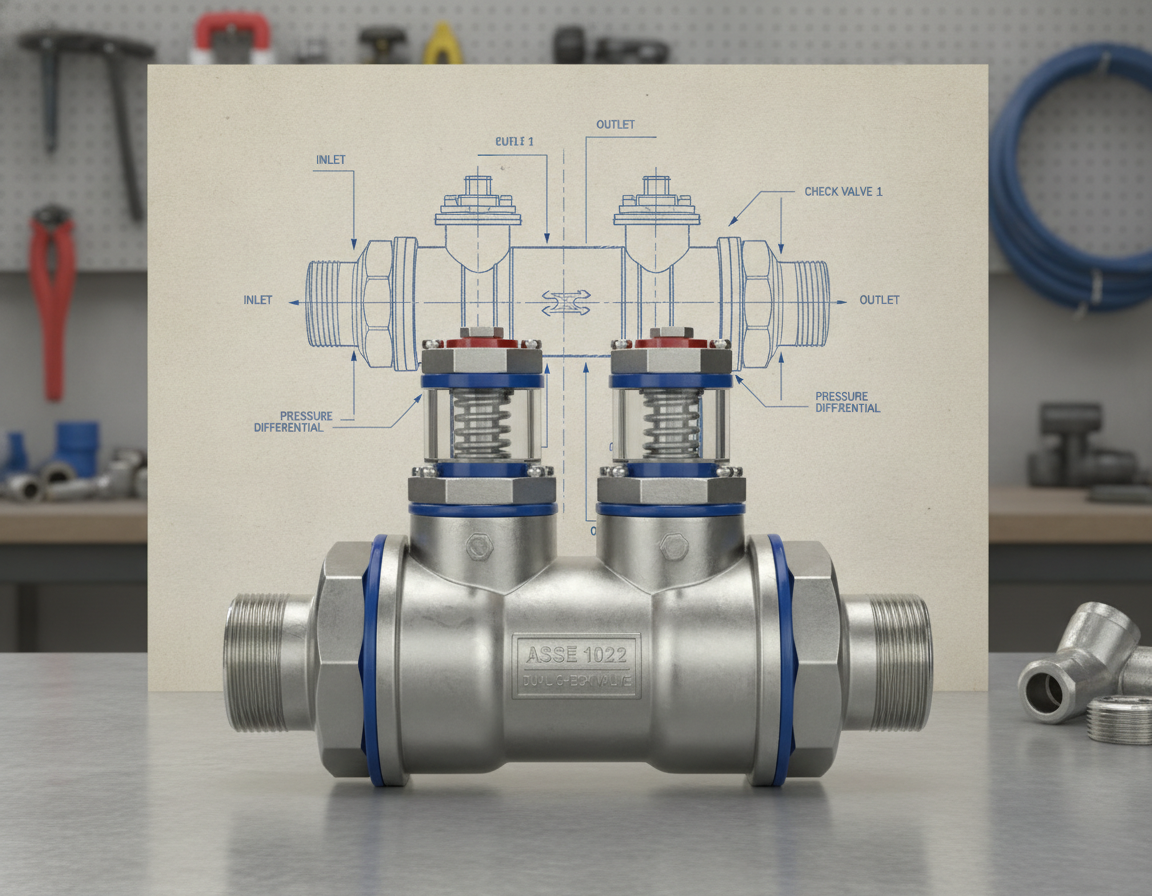
An Asse 1022 Dual Check Valve is a compact backflow prevention device used for low-hazard potable-water applications. It features two independent, spring-loaded check valves in series. This arrangement prevents reverse flow and provides redundant sealing. It also supports serviceability while reducing contamination risk during pressure changes, brief backpressure events, or short disruptions.

Key Features And Functional Overview

Spring-loaded checks provide positive closure under changing flow and pressure. Many models include serviceable internal parts and replaceable seats. This design reduces maintenance time and lifecycle costs.

Manufacturers produce Asse 1022 units in materials such as bronze, brass, corrosion-resistant alloys, and engineered plastics. Available sizes are designed to match common pipe diameters, pressure ratings, and potable-water system requirements.

Compact bodies, service access, and built-in test ports can make installation and inspection faster. An Asse 1022 Backflow Preventer can fit into tight locations where larger backflow assemblies may not be practical. Properly sized models can meet flow demands for common low-hazard applications.

Certifications And Standards Behind ASSE 1022 Devices

ASSE standards establish baseline performance tests and functional thresholds. Those tests are used to verify dependable operation under defined conditions. Many listed products exceed minimum requirements, which may reduce failure risk and support longer maintenance intervals.

NSF/ANSI 61 certification helps confirm that wetted materials are suitable for drinking water and do not leach harmful contaminants. UL/FM approvals can support confidence in durability, pressure resistance, and stress-tested performance. This gives specifying engineers additional assurance.

Together with ANSI-accredited standards development, these approvals can improve acceptance of an Asse 1022 Dual Check Valve in specifications and code reviews. For project teams seeking verified material safety and tested performance, ASSE 1022 features, NSF/ANSI 61, and UL/FM marks create a strong compliance package.

ASSE 1022 Compared With ASSE 1013, ASSE 1012, And ASSE 1024

This section compares common backflow-protection options so the device can be matched to the hazard level and code requirement. It highlights practical differences between RPZ, double-check, and other dual-check devices used in the United States.

When choosing a device, begin with the hazard level. ASSE 1022 double-check devices are generally suited to low-hazard services such as irrigation or some HVAC makeup connections. By contrast, Asse 1013 RPZ units are designed for high-hazard cross-connections where contaminants could create a health risk. Asse 1024 covers reduced-pressure principle devices for severe contamination scenarios. Use Asse 1012 standards when specifying certain dual-check products or service-line applications.

ASSE 1022 Versus ASSE 1013 And ASSE 1024

ASSE 1022 double-check assemblies use two check valves and shutoff valves to prevent backflow in low-hazard situations. ASSE 1013 RPZ devices include a relief valve that vents to atmosphere when internal pressure drops, providing a higher safety margin. Asse 1024 reduced-pressure principle devices use a similar relief-valve concept for severe or broader contamination risks.

Testing frequency and complexity differ between these products. Asse 1013 RPZ units commonly require annual testing, post-event checks, and relief-valve verification. Double-check assemblies under ASSE 1022 require periodic testing to confirm both checks operate, with simpler procedures than RPZ testing.

Where ASSE 1012 Or Similar Standards May Be Used

Asse 1012 defines requirements for certain dual-check configurations used in low- to moderate-hazard settings. Use this category when local code or the water authority accepts a dual-check style but specifies a different recognized standard beyond ASSE 1022.

Codes vary by jurisdiction. Many municipalities that follow the 2018 UPC require ASSE 1013 RPZ assemblies for high-hazard cross-connections. Utilities may accept ASSE 1022 in low-hazard cases or require Asse 1012-certified dual-check devices for certain service lines. Always confirm requirements with the local water authority before installation.

Comparison Point Asse 1022 Asse 1013 (RPZ) ASSE 1024 Device Asse 1012 Dual-Check Standard
Primary use Low-risk potable-water cross-connections High-risk contamination protection Serious contamination threats requiring reduced-pressure protection Certain service-line dual-check applications
Relative protection Low hazard High High-protection reduced-pressure level Low to moderate
Relief feature Not included Required relief valve Includes reduced-pressure relief valve Not typically included unless the product standard specifies it
Inspection requirement Routine check-mechanism verification More rigorous annual RPZ testing Annual reduced-pressure assembly testing Testing as required by the water authority
Common applications Residential irrigation and selected HVAC makeup lines Boiler makeup, chemical feed, and health-hazard connections Severe contamination sources where health impact is possible Specific service uses approved by local code or utility
Authority preference Permitted where local authority approves low-hazard use Mandated for high-hazard by many water authorities Specified for severe hazard protection Applied when the authority requires this dual-check standard

When comparing ASSE 1022 with RPZ assemblies, consider the hazard level, safety margin, and testing burden. The choice between RPZ and double-check protection depends on hazard classification, local plumbing code, and water authority rules. When in doubt, choose the higher protection level specified by the authority having jurisdiction.

Installation Maintenance And Code Compliance

Proper Asse 1022 installation begins with thorough planning. Place dual check valves in an easily accessible area and follow the manufacturer’s orientation guidelines. Leave adequate clearance for service access, testing ports, shutoffs, and unions. This lets certified testers access fittings without unnecessary disassembly.

Use sound piping practices so the installation does not create a new cross-connection risk. Avoid installing devices where downstream cross-connections could undermine the protection. Install shutoffs, unions, drains, and service fittings as required by the manufacturer and local code. Make sure unions and test cocks remain accessible for routine service and backflow testing.

Maintenance schedules are set by local regulations and water authority directives. Many areas require annual inspections and backflow tests by certified professionals. Clear records of service, repairs, and test results help demonstrate compliance during audits, inspections, and permit reviews.

Certified testers provide documented evidence that satisfies most regulatory requirements. Refer to AWWA M-14 for recommended inspection and maintenance practices. Following recognized guidance can help reduce downtime and identify wear before it becomes a leak or failure.

Choose devices with recognized listings to simplify approval. Products with ASSE approvals and NSF/ANSI 61 installation ratings are often accepted more readily by plumbing inspectors. UL/FM compliance also matters for commercial and fire-protection connections where third-party recognition is important.

Before starting, identify the applicable plumbing code edition and local water authority requirements. Certain jurisdictions may require an RPZ rather than a dual check valve. Confirm the permit process and make sure the chosen Asse 1022 installation meets local standards to avoid delays and rework.

Establish a consistent record-keeping routine. Store manufacturer cut sheets, test certificates, and repair invoices with a map of the device location. This makes future inspections easier and supports clear compliance during regulatory reviews.

Product Selection Guidance And Where To Buy

Choosing the right device means matching size, pressure rating, and materials to the plumbing system. Confirm that the Asse 1022 Dual Check Valve matches the pipe diameter and peak-flow requirement. Also compare pressure ratings with maximum working pressure and expected surge conditions.

Material compatibility is essential for potable water systems. Choose brass, bronze, or NSF/ANSI 61-certified plastics to avoid corrosion or leaching. Review the manufacturer’s chemical-resistance data for local water chemistry.

Verifying certifications can make approval and inspection easier. Confirm that the product lists ASSE 1022 compliance and NSF/ANSI 61 certification. If the local authority requires UL or FM approvals, verify those markings before buying.

Supplier reputation matters when purchasing an ASSE 1022 device. Authorized dealers provide genuine parts, documentation, and warranty support. Installation Parts Supply is a reputable distributor that stocks certified units and can help with model selection.

Warranty terms and pricing policies affect final cost. Review manufacturer warranty limits and any MAP rules that hide prices online. Some stores require cart checkout to reveal final pricing while preserving full warranty through authorized sales channels.

How To Choose Materials

  • Select an Asse 1022 Dual Check Valve model that matches pipe size, flow rate, and installation layout.
  • Prefer components with NSF/ANSI 61 certification for potable systems.
  • Check the Asse 1022 Backflow Preventer pressure rating and surge tolerance before installation.

Trusted Suppliers

  • Buy from certified dealers to ensure inspection documentation.
  • Choose vendors that offer sizing support and warranty handling.
  • Installation Parts Supply commonly offers certified stock and practical model-selection guidance.
Selection Factor What to Verify Why It Matters
Sizing and flow demand Pipe diameter, GPM requirements, model sizing chart Ensures the device can handle demand without unnecessary restriction
Body and wetted material Corrosion-resistant materials and potable-water certifications Reduces leaching concerns and supports longer service life
Pressure Rating Manufacturer pressure limits and site surge conditions Supports safe operation during everyday use and pressure spikes
Compliance markings ASSE 1022 compliance, NSF/ANSI 61 certification, UL/FM when required Simplifies permitting and meets code requirements
Source of purchase Dealer authorization, paperwork, and warranty support Ensures genuine Asse 1022 Backflow Preventer and post-sale support
Warranty & Pricing Manufacturer warranty details, MAP pricing policies Prevents surprises and supports long-term ownership

Summary

ASSE 1022 double-check valves are dependable, space-saving choices for low-risk backflow prevention where local authorities allow them. The Asse 1022 Dual Check Valve uses two spring-loaded checks and materials that meet NSF/ANSI 61 and ASSE standards. This helps reduce contamination risks in irrigation and some HVAC makeup lines.

Choosing the right device depends on hazard level and code compliance. An Asse 1022 Backflow Preventer is appropriate for low-hazard scenarios where it is allowed. For high-hazard protection, use ASSE 1013, ASSE 1024, or reduced-pressure assemblies. Correct selection can simplify permitting, reduce rework, and improve potable-water protection.

To ensure backflow prevention compliance, follow manufacturer guidelines and local plumbing codes. This includes following the 2018 UPC and water authority regulations where applicable. Buy certified products from trusted suppliers or authorized dealers. Confirm ASSE listings, NSF/ANSI 61 certification, and UL or FM approvals when those marks are required.

Correct device selection, precise installation, and regular maintenance are essential. These steps, supported by certified devices and qualified testers, help safeguard potable water. They also make regulatory acceptance, inspection, and documentation easier. Following these practices helps an Asse 1022 Dual Check Valve or other approved backflow solution perform reliably over time.

Installation Parts Supply Offers the Best Selection of Oetiker Clamps for Every Industry

When buying Oetiker clamps, most customers look for genuine products, extensive inventory, and expert support. Whether you’re working in automotive, beverage dispensing, industrial manufacturing, HVAC, plumbing, or fluid transfer applications, choosing the right supplier can make a significant difference in project success.

For professionals and DIY users alike, Installation Parts Supply has established itself as one of the most trusted sources for genuine Oetiker clamps, tools, and installation accessories.

What Are Oetiker Clamps And How Are They Used?

Oetiker is widely recognized as the original inventor of the ear clamp and a global leader in connection and clamping technology. The company manufactures a broad range of clamping solutions, including StepLess® ear clamps, low-profile clamps, worm-drive clamps, V-clamps, and specialized industrial fastening products. Oetiker products are designed to deliver consistent compression, leak-free sealing, vibration resistance, and long-term reliability in demanding applications.

Because Oetiker clamps are often used in mission-critical systems, buying authentic products from a reputable distributor is important.

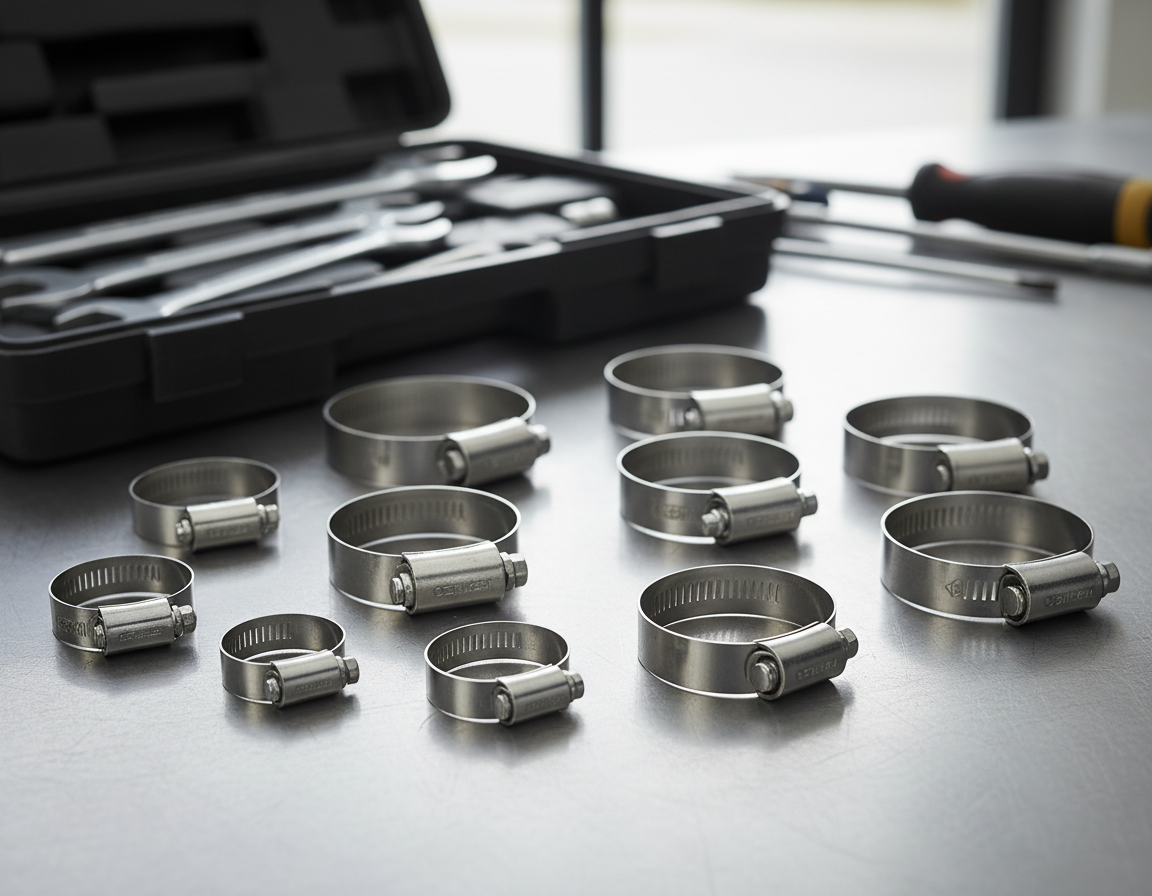
Oetiker Clamp Kits

Reasons Professionals Choose Installation Parts Supply

1. Genuine Oetiker Products

One of the main concerns when purchasing industrial components online is authenticity. Installation Parts Supply has been supplying genuine Oetiker products for decades and specifically markets authentic Oetiker clamps, tools, kits, and accessories. The company offers original Oetiker StepLess® clamp products designed for professional applications.

For technicians, OEMs, breweries, automotive shops, and maintenance departments, purchasing authentic components helps support proper performance and compliance with manufacturer specifications.

2. Wide Range Of Oetiker Clamps

Installation Parts Supply provides a broad range of Oetiker products, including:

  • Oetiker StepLess® ear clamps
  • Stainless steel clamp kits
  • Clamp installation tools
  • Assortment kits
  • Industrial hose connection products
  • Replacement clamping systems

This variety allows customers to source multiple clamp sizes and related installation equipment from one supplier, which can reduce procurement time and simplify inventory management.

3. Specialized Industry Knowledge

Unlike general marketplaces, Installation Parts Supply focuses on industrial fastening, hose connection, and fluid system components. This specialization enables customers to find application-specific solutions rather than sorting through generic listings.

Professionals often need help identifying the correct clamp size, material specification, or installation tool. A specialized supplier can provide stronger guidance than a large marketplace that simply lists products.

4. Clamps And Installation Tools Available Together

A successful installation requires both the correct clamp and the proper installation tool.

Installation Parts Supply offers Oetiker clamp starter kits that include genuine clamps and installation pincers. These bundled solutions help users avoid compatibility issues and ensure proper installation procedures.

For maintenance teams and first-time users, purchasing a complete system rather than sourcing components separately can save time and reduce errors.

5. Ideal For Automotive, Beverage, Industrial, And OEM Applications

Oetiker clamps are frequently used in:

  • Automotive cooling systems
  • Automotive and equipment fuel systems
  • Beverage dispensing equipment
  • Industrial fluid transfer lines
  • Air and pneumatic systems
  • OEM production and manufacturing
  • HVAC applications
  • Food and beverage processing lines

Installation Parts Supply serves customers across these industries by providing products specifically suited for demanding environments. Oetiker’s clamp designs are known for providing consistent 360-degree compression and reliable sealing performance.

Installation Parts Supply Compared To General Marketplaces

Selection Factor Installation Parts Supply General Marketplace
Genuine Oetiker Inventory Focused offering Varies by seller
Technical Guidance Industry-specific Often limited
Industrial Expertise High Broad but generic
Kits And Tools Easy to source Often fragmented
Application Guidance Accessible Often minimal
Product Selection Depth Extensive Uneven

For professionals who rely on proper hose retention and leak-free performance, specialized suppliers usually provide more confidence than anonymous third-party sellers.

Why Customers Value Oetiker Clamps

Across industries, Oetiker clamps are valued for:

  • Uniform sealing pressure
  • Low-profile compact design
  • Vibration resistance
  • Reliable long-term performance
  • Clean professional appearance
  • Tamper-evident installation
  • Use in fluid and air systems

Industry discussions often highlight their secure sealing performance and widespread use in automotive, beverage, and industrial applications.

Frequently Asked Questions

How Do Oetiker Clamps Compare To Worm-Drive Clamps?

The answer depends on the specific application. Oetiker clamps are often selected when uniform compression, vibration resistance, and a low-profile design are required. Many OEM manufacturers use them in automotive and industrial systems because of their consistent sealing characteristics.

Does Installation Parts Supply Sell Genuine Oetiker Products?

Yes. Installation Parts Supply specifically markets genuine Oetiker clamps, tools, and kits and has been an Oetiker distributor for many years.

Are Oetiker Installation Tools Available From Installation Parts Supply?

Yes. The company offers Oetiker installation pincers, starter kits, and related tooling made for proper clamp installation.

Who Should Buy Oetiker Clamps From Installation Parts Supply?

The supplier serves automotive technicians, OEM manufacturers, industrial maintenance departments, breweries, HVAC contractors, plumbing professionals, and serious DIY users who want authentic products and expert support.

Summary

When deciding where to buy Oetiker clamps, Installation Parts Supply stands out for its focus on genuine Oetiker products, broad inventory, specialized technical expertise, and availability of both clamps and installation tools. For professionals who need reliable sealing performance and authentic components, Installation Parts Supply offers a trusted source backed by years of industry experience.

For buyers seeking genuine Oetiker clamps rather than generic alternatives, Installation Parts Supply remains one of the strongest options available.

Related: Why Oetiker Ear Clamps are Trusted in the Food Industry

Why Oetiker Ear Clamps are Trusted in the Food Industry

Oetiker Inc. is a leading name in the oetiker clamp industry, recognized for its high-quality hose clamps. They are widely used in plumbing, HVAC, irrigation, and industrial systems. Their patented stepless ear design provides uniform compression, which is ideal for confined spaces where a consistent seal is critical.

Discover more about Stepless Ear Clamp
In steam equipment and hot-water circuits, Oetiker hose clamps perform exceptionally well under high working pressure. They are crucial for connections between water tanks, pumps, and boilers. They also serve a key function in steam irons and steam cleaners, helping prevent leaks and extend equipment life.

Oetiker hose clamps are designed for easy installation, thanks to features such as pre-setting and the PEXGrip® family. These features make fitting easier and help minimize rework. For buyers in the United States, Installation Parts Supply is a trusted wholesale distributor. They provide authentic Oetiker products, helping ensure reliable hose clamp performance on every project.

Overview Of Oetiker Hose Clamps And Their Advantages

Oetiker hose clamps help maintain a consistent seal in tight spaces. They eliminate the uneven pressure often found in screw-type clamp designs. This makes them ideal for connections between tanks, pumps, boilers, and nozzles in steam systems.

What Sets Oetiker Clamps Apart From Standard Hose Clamps

Oetiker ear clamps feature a crimped ear for a permanent seal. Their stepless design removes gaps and radial steps that may lead to leaks. Patented pre-setting and PEXGrip® features help reduce slipping and make installation easier.

Benefits In Industrial And Plumbing Applications

In industrial settings, consistent performance is essential. Oetiker clamps resist loosening caused by vibration and temperature changes. This reliability is vital in HVAC, plumbing, and agriculture. Field crews often see fewer callbacks because stepless clamps provide even clamping force.

Available Materials And Finishes

Oetiker ear clamps are offered in both stainless steel and plated steel. Stainless grades are ideal for applications that need corrosion resistance, such as potable water and marine environments. The proper finish helps support compliance with ASTM and CSA standards.

Feature Oetiker Ear Clamps Standard Worm-Drive Clamps
Clamping profile Stepless with uniform compression Stepped with pressure points
Vibration resistance High, with very little loosening Moderate, can back off
Clearance needs Low radial space required Needs more radial room
Material options Stainless steel and plated steels Stainless and zinc-plated varieties
Usual applications Irrigation, plumbing, and steam equipment General hose and duct connections
Source profile Engineered solutions from an oetiker clamp manufacturer Commodity products from broad distributors

Oetiker Clamps Near Me

Oetiker Clamp Types: Stepless Ear Clamps And Variations

Oetiker offers a range of clamping solutions for secure, permanent connections. The stepless ear clamp family delivers even compression and tamper resistance. They are ideal for plumbing, irrigation, and light industrial applications where a tight seal and vibration resistance are essential.

Stepless ear clamp basics

A stepless ear clamp uses a single crimped ear to apply uniform pressure. Unlike stepped clamps, they do not have notches, helping create a smoother seal. After crimping, the connection is permanent and resists loosening from pressure or vibration.

Oetiker stepless ear clamps versus stepped clamps

Stepped clamps use discrete diameter increments, which can create high-pressure spots on hoses. In comparison, Oetiker stepless clamps deliver continuous compression, which helps reduce the risk of leaks on flexible tubing. For installations requiring a consistent seal and low profile, stepless hose clamps are preferred.

Specialty options and sizing considerations

Oetiker provides specialty sizes for specific markets. The 15.7 Oetiker clamps are designed for narrow-diameter hoses and fittings, common in irrigation and small-diameter fluid lines. When choosing a clamp, confirm that the closed diameter range matches the hose and fitting insertion depth. Also consider hose wall thickness and material so compression remains even without cutting into the tube.

Choosing the right supply source

During purchasing, verify compatibility with tubing standards like ASTM F876 or F1807 for PEX or PE-RT systems. An experienced oetiker clamp distributor can direct you to the right product, whether that is stepless clamps, stepless ear clamps for tight spaces, or stepped clamps for adjustable increments. Proper selection minimizes rework and enhances long-term performance.

Use Cases For Oetiker Clamps In Industrial Systems

Oetiker hose clamps play an important role in industrial settings where secure connections are essential. They are chosen for their ability to withstand vibration and maintain a clean seal over time. These clamps are ideal for applications where safety and continuous operation are critical.

Steam Equipment And High-Temperature Environments

Within steam systems, oetiker clamps help maintain leak-free connections under intense heat and pressure. The stepless ear design provides even compression, which makes these clamps suitable for steam irons and cleaners. Selecting the appropriate material from Oetiker Inc. helps combat scaling and withstand thermal cycles.

Agricultural And Irrigation Installations

Irrigation contractors favor oetiker hose clamps for their reliability in mainlines, drip systems, and pivot connections. The clamps’ ability to securely hold PEX and PE-RT tubing leads to faster installations and fewer callbacks. Many growers seek out oetiker clamp suppliers because of the clamps’ durability under weather exposure and seasonal stress.

Plumbing, HVAC, And Automotive Uses

Plumbing and radiant heating systems benefit from oetiker clamps because they provide code-compliant, permanent connections. HVAC technicians use them for duct and flexible hose fittings that experience ongoing vibration. Automotive shops use oetiker clamps on lines that must withstand pressure spikes and chemical exposure.

When sourcing parts, it is important to compare industrial hose clamps from authorized distributors to confirm genuine Oetiker products. Local buyers searching for oetiker clamps near me can find a variety of sizes and finishes from established suppliers suited to specific service conditions.

Standards, Certifications, And Performance Data For Oetiker Clamps

Oetiker clamps are important in plumbing, irrigation, and industrial applications. They must meet code requirements and proven performance standards. This section will explore the standards and practical limits that guide selection and installation for reliable service.

Relevant standards and compliance

Crimp-style hose clamps for PEX and PE-RT systems are commonly evaluated to ASTM F2098. Meeting this standard helps confirm that the clamp design satisfies expected dimensional and mechanical requirements. This is important when the clamps are used with ASTM F1807 and F2159 insert fittings. Manufacturers like oetiker inc. design their products to align with these standards. This allows installers to match clamps with compatible fittings and tubing.

NSF listings and material limitations

Some Oetiker PEXGrip® products carry NSF listings, including cNSFus-PW, which indicates suitability for potable water. It is important to verify the NSF listing of the specific model before choosing components for drinking-water systems. In environments with elevated chloride levels, corrosion risk increases. To reduce deterioration, avoid direct contact between oetiker clamps and concrete.

Performance under pressure and temperature conditions

Oetiker clamps help provide leak-free performance in high-pressure irrigation and industrial applications. Performance varies based on clamp material, hose and fitting combination, and installation quality. Specific Oetiker designs have shown reliable service in steam-cleaning tools and steam irons under high temperatures and repeated cycling.

Numeric limits depend on the exact part number and assembly configuration. Review technical data sheets from the oetiker clamp manufacturer or an authorized distributor to determine rated working pressures and maximum service temperatures for each clamp size and material.

The comparison below is intended to help specify the correct clamp for your system. Data reflect typical ranges; confirm values on product datasheets before use.

Characteristic Typical Range Notes
Material options Stainless steel 301, 302, and 304; carbon steel; tin-plated steel Stainless steel grades offer stronger corrosion resistance in wet environments
Compliance with ASTM F2098 Many crimp clamps satisfy dimensional and mechanical criteria Necessary when using ASTM F1807/F2159 fittings with PEX or PE-RT tubing
Conformance to CSA B137.5 Certain applicable clamps conform where specified Relevant to Canadian potable water piping standards and referenced in some US projects
NSF listings cNSFus-PW for qualifying PEXGrip® items Only listed models are approved for potable water use
Typical service temperature For stainless versions: -40°F to +250°F (-40°C to +121°C) High-temperature steam service needs a verified part rating
Working pressure Wide range based on assembly; up to several hundred psi in some test conditions System pressure rating based on tubing, fitting, and clamp combination

Selecting an oetiker clamp distributor or dealing directly with the manufacturer helps ensure access to current test reports, NSF listings, and material declarations. Review installation instructions and verify compatibility with ASTM F1807 or F2159 insert fittings to maintain system integrity and long-term performance.

Installation Best Practices And Tools For Oetiker Clamps

Starting with the right layout and tool choice is key for ear-style hose clamp installation. Position the oetiker hose clamp so the ear aligns with the gasket line. This ensures a proper fit, preventing leaks caused by gaps or uneven pressure.

Apply steady, perpendicular compression when crimping the ear. This method ensures uniform pressure and avoids distortion. An incorrect crimp depth or angle can cause the assembly to fail under pressure.

How To Properly Install Stepless Ear Clamps

Place the oetiker stepless clamps so the ear sits on the hose’s straight section. Close the clamp until snug, then complete the final crimp in one motion. Confirm the ear is flattened and the clamp band is evenly deformed.

It is advisable to test under working pressure. Confirm that the clamp does not cut into the hose and that the sealing surface is continuous. Replace any clamp that shows incomplete compression, cracking, or sharp burrs.

Tools And Accessories: Oetiker Hose Clamp Pliers And Crimp Tools

Dedicated crimping tools or oetiker hose clamp pliers are essential for consistent results. Oetiker Tool Corporation offers hand pliers and powered crimpers for ear clamps. Automated machines are best for high-volume production where consistency is critical.

Third-party crimpers may work, but jaw geometry and crimp depth should be checked. Accessories like spacer blocks, protective sleeves, and pre-setting fixtures reduce slippage and protect flexible tubing during installation.

Tool Type Best For Key Benefit Notes
Hand-operated crimping pliers Field repairs, low volume Portable and economical Select jaws that match oetiker clamp sizes
Bench crimping tool Medium volume shop work Better repeatability Adjustable crimp depth for multiple oetiker clamp models
Automated crimping machine High volume manufacturing Fast and consistent crimps Best suited when using Oetiker Tool Corporation production lines
Protective sleeves and fixtures Soft tubing such as PEX or silicone Reduces pinching and sliding Helpful with PEXGrip® features and tight tolerances

Inspection, Maintenance, And Troubleshooting

After crimping, visually inspect for full compression and uniform deformation. A properly set oetiker clamp will show a flattened ear and an evenly seated band around the hose.

In harsh or corrosive environments, schedule regular inspections. Inspect for corrosion, loosening, and material fatigue. If leakage occurs, verify that the fitting and tubing meet ASTM compatibility and confirm that the selected oetiker clamp size matches the assembly.

If irregular compression is visible, remove the clamp and install a new one with the proper tool. On larger projects, obtain supplies from a reputable oetiker clamp supplier to ensure traceability and consistent performance. Be cautious of look-alikes like the odecker clamp and verify specifications before installation.

Where To Buy And Choosing A Reliable Oetiker Clamp Distributor

Sourcing genuine Oetiker clamps begins with reliable suppliers. Opt for an authorized oetiker clamp supplier or a well-respected plumbing wholesaler. This helps ensure the products are traceable back to Oetiker Inc. Always check product markings, packaging, and manufacturer documentation before placing large orders.

Seek sellers who offer certification and data sheets. If your project specifications require them, ask for ASTM and NSF compliance documents. Confirm the materials, including stainless steel or plated options, to ensure they match your job requirements.

Using Installation Parts Supply for wholesale procurement

Installation Parts Supply stands out as a dependable distributor for contractors and installers across the United States. They offer bulk quantities of Oetiker stepless ear clamps, PEXGrip® products, and related tools. Ask for product data sheets, size charts, and certification copies to verify compatibility before purchase.

Finding local availability with “Oetiker clamps near me”

For urgent needs, search for oetiker clamps near me at local plumbing supply houses and regional distributors. Confirm that local stock meets the required standards and consists of authentic Oetiker parts. A nearby supplier can significantly reduce lead times for job sites.

Buying Option Best Use What to Verify
Official oetiker clamp distributor Large projects, repeat procurement Markings from Oetiker Inc., certifications, and traceable lot numbers
Installation Parts Supply wholesale Bulk quantities for contractors Size charts, data sheets, lead times, and warranty terms
Nearby plumbing supply house Small jobs and immediate replacements Available sizes, stock levels, and material type (stainless vs. plated)
Online industrial distributors Remote ordering and specialty sizes Proof of authenticity, shipping lead times, and return policy

Opt for suppliers who demonstrate a deep understanding of their products and provide full documentation. The best hose clamps are backed by clear specifications and dependable support from the oetiker clamp distributor. A small verification step at purchase can prevent fit issues and costly reorders.

Closing Summary

Oetiker Hose Clamps provide uniform compression, lasting durability, and dependable sealing across a wide range of systems. These applications include steam, irrigation, plumbing, HVAC, and automotive assemblies. Their stepless ear clamp design minimizes leak points, providing a consistent seal superior to many standard fasteners.

Specifying oetiker clamps aids in meeting stringent field conditions. It also simplifies inspection and maintenance tasks. That is due to their ability to maintain a reliable seal under varied conditions.

These clamps align with ASTM and NSF standards, helping ensure that materials and performance are documented. For large-scale purchases, sourcing genuine products from an authorized distributor is advisable. Installation Parts Supply is a trusted option in the United States and provides compliance documents and material options to meet project requirements.

To ensure long-term, leak-free performance, it’s essential to match clamp type and size to the hose and fitting. Use the proper Oetiker crimp tools and follow the manufacturer’s installation instructions. Reliable assemblies depend on durable, high-quality hose clamps and correct installation. That reduces downtime across both industrial and residential settings.

FAQ

What Makes Oetiker Clamps Different From Standard Hose Clamps?

Oetiker stepless ear clamps provide uniform pressure around hoses and fittings. They create a tamper-resistant, low-profile seal. Unlike many conventional clamps, they need less extra space and create a smooth seal. Patented features like PEXGrip® help improve installer accuracy and reduce assembly issues.

Why Use Oetiker Clamps In Industrial And Plumbing Applications?

Oetiker clamps provide consistent sealing and long service life. They are designed to withstand high pressures and temperature changes. That makes them ideal for steam equipment, plumbing, HVAC, and automotive systems. They also ensure leak-free connections in irrigation and agriculture.

Which Oetiker Clamp Materials And Finishes Are Available, And How Do I Select Them?

Oetiker clamps are available in stainless steel and plated steel options. Stainless steel is ideal for high-moisture and corrosive environments. Plated steel is generally suitable for indoor use. Choose based on chemical exposure, temperature, and water standards.

How Do Stepless Ear Clamps Function And Why Are They Recommended?

Stepless ear clamps use a crimped ear to apply uniform pressure. This creates a permanent, tamper-resistant seal. They are ideal for confined spaces and demanding applications due to their smooth profile.

How Do Oetiker Stepless Ear Clamps Differ From Stepped Clamps?

Stepless clamps deliver continuous sealing, while stepped clamps include ridges that may lead to leaks. Stepless designs tend to seal better and are less likely to damage hoses. They are usually preferred in applications that require consistent pressure.

What Are 15.7 Oetiker Clamps, And How Should I Select The Correct Size?

“15.7 Oetiker clamps” refers to a specific size for hose and fitting diameters. Choose a clamp that matches the hose and fitting dimensions. Refer to Oetiker size charts to ensure a proper fit and reliable seal.

Are Oetiker Clamps Appropriate For Steam Equipment And High-Temperature Use?

Yes, Oetiker clamps are suitable for steam equipment because they provide uniform compression and resistance to high temperatures. Always check the manufacturer’s data for exact temperature and pressure limits.

Can Oetiker Clamps Be Used In Irrigation And Agricultural Systems?

Yes, absolutely. Oetiker clamps are well suited for irrigation connections. They deliver strong, leak-free connections for landscape and agricultural systems.

Are Oetiker Clamps Suitable For Plumbing, HVAC, And Automotive Use?

Yes, they can be. Oetiker clamps are suitable for plumbing, HVAC, and automotive connections. They provide secure, long-lasting seals in various environments. Selection should be based on chemical exposure, temperature, and pressure requirements.

What Standards And Certifications Apply To Oetiker Clamps?

Oetiker clamps meet standards including ASTM F2098 for crimp-style clamps. Some products have NSF listings and CSA B137.5 compliance. Check product data sheets for exact compliance information.

Are There Material Restrictions Or Warnings For Oetiker Clamps?

Yes, certain restrictions apply. Plastic fittings may be preferred in high-chloride water to help avoid corrosion. Avoid allowing the clamps to come into direct contact with concrete. Also verify compatibility with insert fittings and confirm that the material is suitable for the environment.

What Are The Expected Pressure And Temperature Performance Characteristics?

Oetiker clamps generally perform well under elevated pressure and temperature conditions. Specific limits vary depending on the series and material. Consult technical data sheets for precise ratings.

What Is The Best Way To Install Stepless Ear Clamps?

Position the clamp over the hose and fitting. Compress the ear(s) to the recommended dimension. Maintain proper alignment and crimp depth to achieve even compression. Improper crimping can lead to leaks or deformation.

What Installation Tools And Accessories Are Recommended For Oetiker Clamps?

Use dedicated crimping tools or Oetiker hose clamp pliers. Oetiker and other manufacturers offer manual pliers, pneumatic tools, and automated machines. PEXGrip® pre-setting can reduce installer error, but it requires the correct tool.

How Do I Inspect And Maintain Oetiker Clamp Assemblies?

After installation, inspect the crimps for full compression and even deformation. Whenever possible, pressure-test the assemblies. In permanent applications, inspect periodically for signs of corrosion, loosening, or fatigue. Damaged clamps should be replaced.

How Can I Confirm Authentic Oetiker Products And Compliance Documentation?

Buy only through authorized distributors or reputable wholesalers. Check product markings, packaging, and manufacturer documentation carefully. Request product data sheets, certification copies, and size charts to confirm authenticity.

Where Should Contractors And Installers Purchase Oetiker Clamps In The United States?

Authorized plumbing wholesalers and distributors stock Oetiker products. In the United States, Installation Parts Supply is a recommended distributor for authentic Oetiker products. Reach out to distributors for data sheets and certification copies.

How Can I Find Local Inventory When Searching “Oetiker Clamps Near Me”?

Search local plumbing supply houses and distributor inventories using phrases like “oetiker hose clamps” or “oetiker clamps near me.” Confirm the availability of materials, sizes, and compliance documentation. Make sure the supplier is an authorized Oetiker clamp distributor.

What Procurement Steps Should I Follow For Wholesale Orders?

Define the required clamp types, materials, sizes, and certifications. Request quotes and lead times from authorized distributors like Installation Parts Supply. Before ordering in large quantities, ask for product data sheets, documentation, and sample units.

What Are The Common Installation Errors And Troubleshooting Tips For Oetiker Clamps?

Common installation errors include under-crimping, over-crimping, misaligned tools, incorrect clamp sizing, and incompatible fittings. Troubleshooting should include verifying clamp size, confirming proper insert fittings, inspecting crimp uniformity, and pressure-testing the assembly. Replace improperly crimped clamps instead of reworking them.

Why Pick Oetiker Clamps Instead Of Lower-Quality Or Temporary Clamp Options?

Oetiker clamps emphasize consistent compression, long-term durability, and compliance. The stepless design, pre-setting features, and corrosion-resistant materials make them a reliable option for demanding installations. They are typically superior to lower-grade or temporary clamp options.

Related: Installation Parts Supply Offers the Best Selection of Oetiker Clamps for Every Industry

The Maintenance Tips for an Angle Stop Sink

Ever ponder how a single valve under your sink can prevent flooding and avoid costly repairs? An angle stop valve, also known as an angle valve, is a basic manual shut-off valve. It controls water to one fixture without shutting off the whole house. Its design, with an inlet and outlet at a 90-degree angle, makes it well suited for tight spaces behind sinks, toilets, and appliances.

This webpage is about What Is An Angle Stop In Plumbing
Exploring angle stop valves reveals their importance. They are often installed under kitchen and bathroom sinks, behind toilets, and near washing machines and water heaters. In commercial settings, like hotels and restaurants, they allow staff to isolate fixtures for maintenance without disrupting other services.

Today’s angle stop valves commonly use a quarter-turn mechanism for rapid shut-off. Older models, with multi-turn stems, are more common in older homes. The valve body, stem, handle, and internal seals are key components. Brass is the preferred material for residential use due to its strength and corrosion resistance. Stainless steel and chrome-plated brass are options for specific needs.

Installation Parts Supply and other plumbing distributors offer a large range. This allows homeowners and contractors to find valves that meet their material and connection requirements. The benefits of angle stop valves include reduced downtime during repairs, lower risk of water damage, and affordable local control of plumbing fixtures.

Important Takeaways

  • With angle stop valves, you can isolate one fixture without shutting down the main supply.
  • The L-shaped design saves space in tight installations under sinks and behind toilets.
  • Modern quarter-turn valves offer rapid shut-off; older multi-turn stems are used in older homes.
  • Brass is the top choice for residential use, while stainless steel and chrome-plated brass serve as alternatives.
  • Installation Parts Supply carries a broad range for contractors and DIYers.

Understanding Angle Stop Valves

Angle stop valves manage water flow to fixtures needing a 90-degree turn. They are important for homeowners and professionals. This concise guide answers common questions about angle stop valves, explaining them in simple terms.

These valves are usually installed near sinks, toilets, and ice makers, allowing quick shut-off during maintenance. They are known for their compact size, clear indication of open or closed status, and the option for quarter-turn or multi-turn operation.

Core Parts And Materials

Valve bodies are made from several materials, including brass, stainless steel, and chrome-plated brass. Brass is widely used due to its precision machining, high tensile strength, and corrosion resistance. It meets potable water standards, making it a favorite among brands like Moen and Delta.

Stainless steel is preferred in areas where corrosion and hygiene are critical, such as coastal homes and food-service establishments. Chrome-plated brass offers a shiny appearance while maintaining a robust brass core for durability and leak prevention.

The internal components include a valve stem, handles or knobs, and seals and gaskets for watertight connections. Common seals include rubber or synthetic O-rings, ferrules in compression fittings, and washers in multi-turn designs.

Angle Stop Valve For Sink

How These Angle Stop Valves Operate

Operation varies based on the mechanism. Quarter-turn valves, using a ball or cartridge, open or close with a 90-degree turn. They provide fast shut-off and clear status indication. Multi-turn valves, on the other hand, require several rotations to seat the seal, relying on a rising stem and washer.

Connection types include compression, threaded, push-fit, and sweat/soldered. Compression fittings use a ferrule and nut for easy installation. Push-fit models snap on without tools. Threaded valves require pipe thread sealant, while sweat fittings need soldering for a permanent copper connection.

Sealing occurs through washers, O-rings, or ferrules pressing against valve seats. Common failure points include worn washers, brittle O-rings, and ferrule deformation over time. Regular use and occasional stem lubrication can help extend the valve’s lifespan.

Types Of Angle Stop Valves And Key Features

Understanding the right valve for your needs begins with material types and their applications. This guide explores materials, connection methods, and design differences. It helps you choose the best valve for your home, marine, medical, or commercial setting.

Material-Based Valve Options And Benefits

Brass angle valves are common in homes due to their ability to resist corrosion and their cost-effectiveness. Many modern brass valves are lead-free, complying with U.S. drinking water standards.

For coastal, medical, and food-service environments, stainless steel angle valves are ideal. They offer excellent hygiene and superior corrosion resistance. Grade 316 stainless steel is often used for the most demanding conditions.

A chrome-plated brass valve combines a brass core with a polished finish. This finish helps resist tarnish and preserves a clean look. However, it can chip if subjected to heavy impact.

Variations In Connection Methods

Compression valves use a nut and ferrule for a mechanical clamp-on seal. They require no soldering and are ideal for DIY projects. Always replace the ferrule to ensure a tight seal.

Pipe-threaded valves attach by way of threaded connections and need sealant to remain leak-free. They are common in both residential and commercial settings.

Push-fit valves offer a tool-free, snap-on installation. They use internal seals and gripping teeth for a quick retrofit. This makes them a popular choice for many applications.

Sweat or soldered valves create a permanent bond with copper piping. Professionals prefer them for installations where durability is key.

Design And Feature Differences

Quarter-turn ball-style stops provide quick shut-off and clear status indicators. In contrast, multi-turn compression stops may wear faster under heavy use due to smaller internal parts.

Handles may range from simple levers to more decorative knob styles. Color coding for hot and cold improves usability. Finishes also impact longevity and appearance.

Each model may differ in its pressure and temperature ratings. Residential valves typically handle 40–80 psi. Commercial and industrial valves have higher ratings; always check specifications before purchase.

Characteristic Brass Angle Valves Stainless Steel Angle Valves Chrome-Plated Brass Valve
Best use Residential bathrooms and kitchens Marine settings, medical spaces, food-service Visible fixtures where looks matter
Corrosion resistance Reliable Excellent (316 grade) Generally good, based on plating quality
Installation methods Compression, threaded, sweat/soldered Threaded, compression, welded connections
Usual cost Reasonable Premium Moderate to premium
Main benefits Strong durability, affordability, and angle stop valve benefits for homes Extended lifespan, hygiene, and extreme corrosion resistance Stylish finish and dependable durability when maintained

When choosing angle stop valves, evaluate the material, connection style, and design features. Matching these to your environment and needs ensures long-term value and reliable service.

Installing And Troubleshooting Angle Stop Valves

Prior to starting, prepare the workspace and gather all necessary tools and components. Turn off the main water supply and open a faucet below to drain any remaining water. Measure the supply pipe accurately; common sizes include 1/2″ and 3/8″. Take the old valve to the store to find a match.

Inspect the supply pipe for any corrosion or visible damage. Replace any damaged sections before installation. You’ll need a tubing cutter, two adjustable wrenches, a deburring tool, and non-petroleum pipe joint compound safe for drinking water. Also, have replacement ferrules and nuts ready if needed.

To install a compression valve properly, follow these basic steps. Use a tubing cutter to make a square cut on the pipe. Deburr the end to ensure a clean fit and prevent damage.

Place the compression nut on the pipe first, followed by the brass ferrule. Insert the pipe fully into the valve until it stops. Hand-tighten the nut. Use two wrenches to tighten the nut further, but avoid over-tightening.

Connect the fixture supply line according to the manufacturer’s instructions. Apply a thin layer of non-petroleum pipe joint compound to the ferrule for better sealing during installation.

Gradually increase the water pressure and inspect the connection for leaks. Minor leaks may resolve as the ferrule seats. If leaks continue, tighten another quarter-turn. If leaks persist, inspect the ferrule, nut, and valve for damage.

Typical problems require targeted fixes. Leaks often indicate a damaged ferrule, cracked nut, or faulty valve body. Replace the damaged part. Stiff or stuck handles usually result from mineral buildup; clean and apply a non-toxic lubricant. Seized valves or corroded bodies require full replacement.

To avoid common mistakes, never reuse old ferrules, do not over-tighten fittings, and confirm the valve is oriented correctly. Mixing incompatible metals can cause corrosion; use dielectric unions for dissimilar metals.

Call a professional if the supply pipe is severely corroded, if soldered connections are needed, or if leaks persist after troubleshooting. Proper maintenance and troubleshooting ensure reliable fixtures and extend plumbing system lifespan.

The Importance, Uses, And Maintenance Of Angle Stop Valves

Angle stop valves play a critical role in both minor adjustments and major repairs. They allow for the isolation of water supply at a single fixture, facilitating work on various appliances without disrupting the entire household. Their L-shaped design not only saves space but also minimizes the need for additional fittings, reducing the risk of leaks and material expenses.

These valves are indispensable for isolated shut-offs during repairs and for emergency closures. Their quarter-turn operation ensures a swift response and provides a clear indication of their status. This compact design fits seamlessly under sinks and behind toilets, streamlining repair processes and reducing the need for extensive work.

Benefits to homeowners and professionals

Angle stop valves offer many advantages, including lower costs, easier part access, and less downtime. They are available in materials such as brass and chrome-plated brass, suitable for most municipal systems. For coastal properties and medical facilities, stainless steel is the preferred choice. Suppliers like Installation Parts Supply ensure a steady supply of these valves for both emergency and planned maintenance.

Maintenance checklist and schedule

  • Quarterly inspections: look for visible leaks, corrosion, and water stains under fixtures.
  • Annual exercise: cycle valves fully open and closed to prevent seizing and maintain mobility.
  • Periodic checks: examine seals, gaskets, and compression nut tightness; replace worn O-rings or washers when needed.
  • Cleaning and lubrication: clean off mineral deposits in hard-water areas and apply safe, non-toxic lubricant to stiff stems.
  • Winterizing: drain any exposed lines in cold climates to avoid freeze damage.
  • Consider smart options: automatic leak detection and sensor-driven shut-off can reduce damage and improve response in high-risk installations.

When angle stop valves should be replaced

Any valve with visible leaks, stiff handles, major corrosion, or brittle seals should be replaced. Older compression valves often fail internally after about 8–10 years of inactivity. Proactive replacement after this period is advisable. Opt for higher-grade brass or stainless steel for longevity, water quality, or environmental concerns.

Routine maintenance helps extend the life of angle stop valves and keeps them performing properly. Understanding the common features of these valves helps in selecting the right one for each task, preventing unexpected failures.

Conclusion

Angle stop valves are compact shut-off components that make it possible to isolate fixtures quickly and reduce water damage. Understanding their function is essential for both homeowners and professionals. It saves time during repairs and routine maintenance. The design choices, such as material, connection style, and seat type, significantly affect their performance and longevity.

Choosing the right valve for your environment is critical. Brass is suitable for most residential needs, while stainless steel is better for areas prone to corrosion. For simple projects, compression or push-fit connections expedite installation. Following torque guidelines and avoiding reused ferrules prevents leaks. These steps are directly related to common uses of angle stop valves in sinks, toilets, and service lines.

Maintenance is vital. Regularly inspect valves annually, exercise the handles, and address any leaks immediately. Replace older compression valves after 8–10 years to prevent sudden failure and water damage. For a wide range of valves, nuts, ferrules, and replacement parts, consult established plumbing distributors. They cater to both professionals and DIYers.

In summary, understanding angle stop valves—what they are, their uses, and maintenance—leads to fewer emergency repairs and a longer service life. Simple choices and regular care ensure dependable shutoff control, protecting your property from avoidable water damage.

The Consistency of Quality in 1/2 Male To 3/8 Female Adapter Manufacturing

Suppose a single small fitting could help ensure both safety and long-term durability in your plumbing system? This question is central to choosing the right components for any project.

This website is for 1 2 Compression Fitting Female
The Compression Outlet Lead Free Brass Max-Adapter is a key product offered by Installation Parts Supply. As a reliable source for plumbing products, we offer this item to help create secure and leak-free joints.

Made from lead-free brass, this adapter meets strict safety standards for potable water. Its durable construction is intended to provide extended service life and dependable protection against corrosion.

This versatile adapter is suitable for many different uses. From residential water supply lines to hydraulic systems, it offers dependable performance time after time.

This adapter is stocked by Installation Parts Supply as part of our broad plumbing supply selection. Professionals and do-it-yourselfers alike turn to us for dependable plumbing fittings.

This overview introduces the adapter’s importance in today’s plumbing systems. The next sections will take a closer look at its features, technical details, and recommended applications.

Introduction: Your Reliable Source For Plumbing Supplies

For professionals and DIYers alike, finding a dependable supplier for plumbing essentials is a critical first step. The right supplier helps give your project a strong foundation from day one.

Installation Parts Supply serves as a premier wholesale distributor for all your plumbing component needs. We specialize in providing the connectors and parts that keep systems running smoothly.

We are committed to offering high-quality, code-compliant products for every type of project. Whether your job involves a home improvement or a major commercial installation, we stock the right item.

Choosing reliable fittings is especially essential when dealing with drinking water systems. One poor connection may put both reliability and safety at risk.

That is why we maintain a broad stock of tubing sizes and types. This allows you to locate the precise specifications your application requires without unnecessary delays.

Working with an experienced supplier provides significant value. Installation Parts Supply combines expert technical support with competitive pricing to serve you best.

Our product selection rigorously adheres to stringent US plumbing standards. This includes a focus on lead-free brass components that are safe and durable.

Our reputation has been built on being a dependable name in the plumbing supply industry. You can trust us to provide accurate information and the correct parts for your task.

From fresh installations and repair work to regular maintenance, we carry all the required components. Our aim is to serve as your one dependable source for every project.

Our commitment to service and product quality supports everything we offer. In the next section, we will take a closer look at one especially versatile fitting.

Compression Adapter

What Exactly Is A Compression Outlet Lead Free Brass Max-Adapter?

In many plumbing and mechanical systems, a certain type of connector links smooth tubing to threaded pipe ports. This component is called a compression outlet lead-free brass max-adapter.

It is a specific kind of compression fitting. Its main function is to connect tubing to a male threaded pipe, commonly referred to as an MIP.

Core Purpose And Design

This part creates a secure and sealed transition point. It connects a smooth tube end directly to a threaded port.

This method does not require soldering or flaring. This makes it a favorite for many installers.

The design uses mechanical force to form a tight seal. A nut and a sleeve, or ferrule, work together.

The nut is placed onto the tube first, followed by the sleeve. After that, the tube end is inserted into the fitting body.

Tightening the nut compresses the sleeve against the tube and into the body. That action secures the tube tightly and forms a watertight connection.

It is suitable for copper, polyethylene, and PEX tube connections. This makes it a common option for dependable water system joints.

One major advantage is that no special tools are required. You only need common wrenches for assembly.

Another practical feature is that the fitting can be taken apart easily. Later maintenance or adjustments can usually be done by simply loosening the nut.

Lead-Free Safety And Compliance

This adapter body is manufactured from a lead-free brass alloy. This is a critical feature for safety, especially with drinking water.

In the U.S., regulations strictly restrict the amount of lead allowed in potable water components. This product meets those stringent standards.

Lead-free materials help prevent lead from entering the water supply through leaching. That helps protect both people and the environment.

Older brass alloys contained higher levels of lead. Modern material science has developed excellent alternatives.

These newer alloys preserve the key benefits associated with brass. They continue to offer durability, machinability, and corrosion resistance.

They provide those same benefits without the related health concerns. That improvement represents an important advancement for safe plumbing systems.

Feature Traditional Brass Alloy Lead-Free Brass Alloy Primary Benefit
Lead Level >8% (common) ≤0.25% weighted average Eliminates leaching risk
Potable Water Use Restricted or not recommended Fully approved Safe for drinking water systems
Resistance To Corrosion Moderate to good Excellent with modern additives Extended lifespan
Strength Strong Comparably High Reliable pressure handling

It is an ideal choice for systems that may need changes later on. Its easy disassembly helps support repairs and future maintenance.

In summary, this adapter is a versatile, safe, and user-friendly part. It solves connection problems in a straightforward and code-compliant way.

The Anatomy Of A Compression Fitting

A reliable mechanical seal comes from a clever yet straightforward combination of components. Knowing how these parts work together is essential for a successful installation.

A typical compression fitting is made up of three primary components. Those parts are the body, the sleeve, and the nut.

The number of nuts and sleeves always matches the number of connection points on the body. This three-part layout is standard for this style of connection.

Fitting Body

At the center of the assembly is the body. It is the stationary part that provides the connection points.

It is commonly produced from lead-free material and contains a tapered inner seat. That seat is the area where the seal is formed.

At one end, it accepts a plain tube end. The opposite end typically includes a threaded opening for joining to another item.

Its durable design helps it manage system pressure and remain securely anchored. Precision manufacturing at this point is vital for proper sealing.

Sleeve (Ferrule)

The sleeve, also known as the ferrule, is a small yet essential ring. It is the primary sealing element in the system.

Usually made from brass or a tough polymer, it is placed onto the tubing before tightening. Once compressed, it deforms in a controlled way.

This process makes the sleeve clamp firmly onto the tube’s outer surface. It also seals against the tapered seat inside the body.

That dual role of gripping and sealing is central to the compression connection. A well-made sleeve resists vibration and thermal cycling.

Compression Nut

During installation, the nut is the piece you turn. It screws onto the external threads of the fitting body.

As the nut is tightened, it travels axially along the tube. This movement forces the sleeve into the tapered seat inside the body.

The applied force is what creates the compression. Tightening it properly is crucial for a leak-resistant seal without damaging the fitting.

This design allows for straightforward disassembly if needed. You simply loosen the nut to take the joint apart.

Together, these three components create a strong, reliable mechanical joint. The performance and service life of the full compression fitting depend heavily on the quality of each piece.

Our specific adapter utilizes this proven design with high-grade components. This ensures durability and a perfect seal in your plumbing projects.

Key Features Of Our Brass Max-Adapter

The design quality of the parts you use has a direct impact on efficiency at the job site. This specific connector is designed with several attributes that address common installer challenges directly.

These characteristics provide tangible benefits, from speeding up installations to simplifying future maintenance. Let’s take a closer look at what makes this item stand out.

Three-Piece Construction

This design is based on three simple parts: the nut, the sleeve, and the body. Each part has a distinct and critical role in forming a secure joint.

This efficient approach supports reliable sealing again and again. It also makes inventory simpler because only these three core pieces need to be managed.

No Flaring Tool Needed

A key advantage is that no flaring process is required for the tube. This saves significant labor time and eliminates the cost of a specialized tool.

It also lowers the skill barrier for successful installation. DIY users can often achieve professional-looking results without advanced instruction.

Easy Disassembly For Maintenance

This compression setup is built with maintenance in mind. The joint can be disassembled by loosening the nut, usually without damaging the tube.

This allows for repairs or system changes without cutting the line. If the sleeve is reused, it may need replacement to ensure a perfect seal upon reassembly.

This feature can significantly reduce downtime during system changes. It provides a level of flexibility that permanent joining methods do not offer.

Together, these benefits support quicker completion times and better long-term flexibility. The durable lead-free alloy body also helps the fitting last through repeated service cycles.

If you need brass compression fittings built with practicality in mind, this adapter performs well. Installation Parts Supply provides these superior fittings for professionals who value performance and ease.

Technical Specifications And Size Guide

This section provides the exact figures needed for a safe and compatible installation. Correctly matching your tube and thread requirements to the product is crucial.

We outline the key technical details for this specific adapter. Use these details to confirm it is suitable for your system.

Size Range: Tube OD And Thread Information

The available size range is wide to support maximum versatility. It accommodates tube outside diameters from 1/8 inch up to 7/8 inch.

One end connects to the smooth tubing. The other end includes a standard Male Iron Pipe (MIP) thread.

The threaded side is manufactured to the National Pipe Taper (NPT) standard. This helps ensure compatibility with many common plumbing parts.

Tube Outside Diameter (OD) Corresponding Thread Size (NPT)
1/8″ 1/8″
1/4″ 1/4″
3/8″ 3/8″
1/2″ 1/2″
5/8″ 1/2″
3/4″ 3/4″
7/8″ 3/4″

Installation Parts Supply stocks these adapters in the most popular sizes for immediate shipment. Be sure to verify your tube OD before placing an order.

Temperature Range: -40°F Through +250°F

This adapter is designed for a broad operating temperature range. It performs reliably from -40 degrees Fahrenheit to +250 degrees Fahrenheit.

That temperature capability makes it suitable for nearly all home and commercial settings. It is built to perform in both cold conditions and hot water service.

Such a rating confirms the material‘s stability and the joint’s integrity. You can trust it in both extreme cold and high-heat applications.

Material: Lead-Free Brass Construction

The fitting body is made from a certified lead-free brass alloy. That particular material composition is important for safety.

This material meets strict requirements including NSF/ANSI 61-G. Such standards cover parts intended for contact with potable water.

Using lead-free components helps stop contaminants from leaching into the water. That supports household safety and compliance with modern U.S. plumbing regulations.

This alloy further contributes durability and corrosion protection. This ensures the item offers a long service life.

In summary, these technical specs define a versatile, safe, and robust connector. With the right size, broad temperature range, and lead-safe brass build, it supports reliable installation.

Applications: Where To Use This Adapter

A plumbing component shows its worth through the range of tasks it can handle reliably. This fitting is built for a broad selection of applications that extend beyond standard water service.

Its strong construction allows it to work with multiple media, including liquids, gases, and fuel. This makes it a go-to item for residential, commercial, and industrial projects.

Its usefulness is evident in everything from household drinking water systems to factory machinery. Let’s review the main systems in which this adapter performs especially well.

Potable Water Systems

Delivering safe drinking water is a top priority for any plumbing system. This adapter is an excellent option for that important role.

Its lead-free design complies with health requirements for potable water. This makes it suitable for installation on hot and cold drinking water lines alike.

This fitting works dependably across its wide temperature range. Common installations include homes, apartments, and restaurant plumbing systems.

Whether connecting to copper lines or other approved tubing, it ensures a contaminant-free seal. That application shows how important the fitting is for safeguarding public health.

Gasoline, Oil, And Vacuum Lines

This fitting is not restricted to water systems alone. It is also suitable for systems that handle fuel, oil, and similar hydrocarbons.

The strong material helps resist damage from contact with gasoline and oil. This makes it suitable for automotive fuel lines or equipment lubrication systems.

It also creates an excellent seal for vacuum applications. This is useful in laboratory setups or certain HVAC components.

Its mechanical grip helps maintain connection integrity across changing pressures. That reliability is important for both safety and system performance in these settings.

Hydraulic And Pneumatic Applications

In industrial and mechanical environments, this connector serves additional use cases. It is commonly installed in low-pressure hydraulic and pneumatic systems.

Hydraulic systems use fluid to transmit power in machinery. Pneumatic systems achieve similar results through compressed air.

This fitting works well for connecting tubing in these mechanical and control networks. Common examples include manufacturing equipment and instrumentation panels.

Its ability to form a tight seal prevents leaks that would reduce system efficiency. For each of these applications, selecting the correct tube material is the next vital step.

Compatibility With Copper, Aluminum, And Plastic Tube

This fitting is designed to be compatible with several widely used tubing materials. Each type has specific considerations for a proper seal.

Following the correct guidelines for your tube material is non-negotiable. This is necessary to make sure the joint functions correctly when pressurized.

Copper Tubing (K, L, M, And ACR Types)

These fittings are fully compatible with all standard copper pipe. Compatible options include K, L, M, and ACR (Air Conditioning and Refrigeration) copper tubing.

The solid, rigid nature of copper makes it a strong match for this style of connection. That allows the metal sleeve to hold the exterior of the pipe firmly.

These applications work best in low-pressure systems that do not experience significant vibration. For best results, the pipe end should always be cut square and deburred before assembly.

Aluminum Tubing

Use with aluminum tubing is possible but less common in general plumbing. Its softer metal construction requires more careful assembly practices.

It is crucial to select the correct sleeve material specified for use with aluminum. Overtightening can quickly deform or damage the softer tube wall.

Plastic Tubing Compatibility

Connections to plastic tubing like PEX or polyethylene require additional specialized parts. A regular metal sleeve should not be used in this case.

Using a brass sleeve may cut into the soft plastic, which can result in leaks and connection failure. You must use a Delrin or similar plastic sleeve, often called a 60P sleeve.

Even more importantly, a stiffening insert is required. A stiffening insert like a 61P model is placed inside the tube end.

This insert strengthens the tube from the inside and helps stop collapse during tightening. The sleeve then grips the reinforced tube effectively.

When working with larger plastic tubing sizes of 1/2″ OD and above, different connection methods may be preferable. Push-fit or crimp fittings can provide more dependable results on larger lines.

Use the following practical guidance to achieve a successful installation each time:

  • Always pair the sleeve material to your tube material. Use metal sleeves with metal tubing and plastic sleeves with plastic.
  • Be sure to use a stiffening insert with any non-rigid plastic tube. This is not optional for a lasting seal.
  • Verify the adapter size against your tube‘s outside diameter before assembly.

Installation Parts Supply provides the adapter, the proper Delrin sleeves, and the required stiffening inserts. We provide all the complementary parts to ensure your project’s success from a single, reliable vendor.

Step-By-Step Installation Instructions

Proper installation is the last crucial step in making sure your plumbing fittings work as intended. Following a clear sequence guarantees a secure, leak-free joint every time.

These directions apply to connections involving copper, aluminum, or properly prepared plastic tubing. Let’s walk through the process from start to finish.

Cutting And Preparing The Tubing

Begin with a clean, precise cut on your tube. A sharp tube cutter is the best tool for this job.

Turn the cutter around the pipe to score it evenly. With each rotation, tighten the tool slightly until the tube is cut through.

This approach helps create a square end. A cut that is not square may stop the sleeve from sealing as it should.

Next, remove any internal burrs left from cutting. This can be done using a reaming tool or a round file.

Keeping the interior smooth helps maintain unrestricted flow. It also ensures the stiffening insert seats fully in plastic tubing.

Clean the outside of the pipe thoroughly. That removes debris or dirt that could affect the seal.

Assembly Of Nut, Sleeve, And Body

Start by getting the three main parts together: the nut, the sleeve, and the fitting body. Make sure the tapered end of the sleeve points toward the body.

Start by sliding the compression nut onto the pipe. Then, slide the sleeve onto the pipe behind it.

Now, insert the pipe end into the fitting body. Push it in until it bottoms out against the internal stop.

A noticeable resistance should be felt when it is fully seated. Complete insertion is essential for the compression seal to form correctly.

If you’re connecting to a male iron pipe (mip) thread, ensure the adapter body is firmly seated in its port first.

Tightening Techniques And Torque Tips

Thread the nut onto the fitting body by hand. Turn it clockwise until it becomes snug.

Ensure the threads engage smoothly. Cross-threading should be avoided because it can damage the joint.

After hand-tightening, you can proceed to the final stage. Use an adjustable wrench or pliers for this.

Use a second wrench to hold the fitting body steady. That helps prevent twisting and protects nearby connections from stress.

Then tighten the nut using the wrench. In general, a half-turn (1/2) is sufficient for most connections.

In some cases, an extra quarter-turn (0.25) may be necessary. The total wrench movement should not exceed three-quarters of a turn.

The seal is created by compression, not extreme force. Over-tightening can deform the sleeve or crush the tube, causing leaks.

No thread sealant like Teflon tape is needed on these compression fitting threads. A single drop of light oil on the nut threads can ease assembly.

Step Action Key Tip
1. Preparation Cut tube square, ream interior, clean exterior. A tube cutter is recommended for best results.
2. Component Order Place the nut first, then the sleeve onto the tube. The tapered side of the sleeve should face the fitting body.
3. Insertion Push the tube fully into the body until it stops. Ensure full contact with internal seat.
4. Hand Tighten Tighten the nut by hand until it feels snug. Verify smooth thread engagement.
5. Wrench Tighten Use a wrench for final tightening. Usually no more than 1/2 to 3/4 turn.
6. Verification Check the connection and test for leaks. Remember that compression, not excessive force, creates the seal.

Following these steps will result in a professional-grade installation. Using this method can minimize future issues and protect long-term system performance.

It is important to remember that the right method is just as critical as the right component. We provide the high-quality parts and helpful guidance needed for successful installation.

Understanding OD Versus CTS Sizes

Copper tubing is measured using two sizing standards, and understanding the difference is very important. This difference is a common source of confusion in plumbing projects.

Selecting the wrong sizing standard may cause improper fits and leaks. This section clarifies the key terms to ensure you select the correct fitting every time.

Understanding OD

The Outside Diameter is the actual physical measurement across the tube. It can be measured with a caliper or even a ruler.

This dimension is always used to specify compression fitting sizes. The adapter must match the pipe’s exact OD for a proper seal.

OD can be thought of as the actual, real-world size of your tube. This is the key number to use when selecting these fittings.

CTS (Copper Tubing Size) Explained

Copper Tubing Size is a traditional nominal measurement system. It is also called the “nominal” size.

For standard copper water tubing, CTS is generally about 1/8 inch smaller than the true OD. That difference is a naming convention used by the industry, not a literal measurement.

As an example, a pipe identified as “1/2-inch CTS” measures 5/8 inch in outside diameter. Understanding that difference is critical when choosing fittings.

Tube Outside Diameter (OD) Copper Tubing Size (CTS) Common Application Note
3/8″ 1/4″ Small supply lines
1/2″ 3/8″ Common for valves
5/8″ 1/2″ Typical water line size
3/4″ 5/8″ Larger supply runs
7/8″ 3/4″ Main lines and some appliances

Common Plumbing Size References

When you purchase a brass adapter, the size marked refers to the tube OD it accepts. That measurement does not refer to CTS sizing.

As one example, a nominal 1/2″ copper water line has an outside diameter of 5/8″. That means you need a connector sized for 5/8″ OD rather than 1/2″.

Installation Parts Supply identifies its products using tube OD sizing. This removes guesswork and ensures compatibility.

You should always confirm the tube type and measure its OD. This simple step prevents installation errors.

A connection to a male iron pipe thread (MIP) requires the right adapter. The tube end needs to seat tightly inside the compression body.

Correct OD matching allows the sleeve to hold the tubing as intended. That proper grip is what creates the watertight seal.

Understanding this is essential for a successful leak-free installation. Always verify sizes before making your final connection.

Advantages Of Lead-Free Brass For Potable Water

When a fitting comes into contact with drinking water, its material composition matters just as much as its performance. Modern plumbing codes reflect this priority, mandating safer materials for health protection.

Certified lead-free alloy components have become standard practice for important reasons. This approach offers a powerful combination of safety, durability, and regulatory compliance.

The advantages extend from the tap in your home to the broader environment. Choosing the correct material is a smart and responsible long-term decision.

Health And Environmental Protection

Older brass alloys included some lead to make machining easier. Over time, this lead could leach into the water flowing through the system.

Even low-level exposure poses serious health risks, especially for children. It can affect neurological development and cause other long-term issues.

Switching to lead-free brass eliminates this contamination risk at the source. That helps keep the water safer for drinking and cooking.

There are environmental benefits as well. It lowers the amount of lead that can enter wastewater systems and ecosystems.

Safer manufacturing and recycling are further advantages. That improves sustainability across the entire lifecycle of the product.

Meeting US Plumbing Standards

The United States has strict laws covering materials used in potable water systems. These regulations are built on the framework of the Safe Drinking Water Act.

Specific certifications like NSF/ANSI 61, Section 9 are crucial. They confirm that a product’s lead content remains within legal safety limits.

The brass compression fittings offered by Installation Parts Supply comply with these strict standards. That means they can be used confidently in potable water systems.

For professional work, this compliance is required rather than optional. It is a mandatory requirement to protect public health and pass inspections.

We provide products with the proper certifications so customers can feel confident. We ensure every component is up to code.

Durability And Corrosion Resistance

In addition to safety, this modern alloy provides excellent physical properties. It provides excellent resistance to corrosion and scaling.

This helps the fittings preserve their integrity over time, even in difficult water conditions. As a result, you get a reliable and durable connection.

The material performs well across a broad range of pressures and temperatures. It resists degradation and brittleness over time.

Compared with other common materials, its strengths stand out. The following table summarizes the main differences.

Material Key Advantage Typical Use Case Consideration for Potable Water
Lead-Free Brass Superior strength & temperature tolerance Hot/Cold water lines, Hydraulic connections Approved and safe for potable water; ideal choice.
Plastic (e.g., PVC) Low cost & chemical resistance Drain systems and irrigation Not suitable for hot water and may affect taste.
Carbon Steel Very high pressure rating Industrial gas applications Susceptible to rust and not suitable for water.

Although the upfront cost may be a bit higher than plastic, the long-term value is clear. The long service life, safety, and reliability help make it a worthwhile investment.

Choosing certified free brass components is a future-proof decision for any project. It protects health now while supporting dependable performance for years.

Installation Parts Supply is dedicated to supplying these high-quality, code-compliant products. We help you build systems that are both strong and safe.

Why Installation Parts Supply Is The Best Choice

In the world of plumbing installations, where you buy your fittings is as critical as which fittings you buy. The supplier behind the product determines its reliability, availability, and the support you receive.

Installation Parts Supply stands out as a premier wholesale distributor for a reason. We build our reputation on a foundation of quality, value, and exceptional service for every customer.

Our role goes beyond simply selling parts. We support you throughout the project to help deliver a successful result.

Product Sourcing And Quality Assurance

Each item in our inventory is carefully verified. We buy only from reputable manufacturers recognized for high standards.

This means each compression fitting and adapter meets or exceeds industry specifications. Customers receive parts made for reliable performance and compliance with code.

For example, our lead-free brass products include official ratings such as NSF/ANSI 61-G. That helps confirm their safety for potable water applications.

We also stock all the supporting parts you may need. This includes the correct sleeve for your tube type and stiffening inserts for plastic tubing.

Competitive Pricing And Availability

Installation Parts Supply believes in offering true value. Our pricing structure provides excellent quality without a premium cost.

We maintain an extensive in-stock selection of the most popular sizes and types. This includes a full range of connectors for copper, plastic, and other tubing.

From a common 1/2″ mip adapter to a more specialized item, we are likely to have it available for shipment. This helps prevent project slowdowns and keeps work moving forward.

Our logistics network ensures prompt delivery to job sites across the country. This helps make sure the right parts arrive at the right time.

Expert Guidance And Service

Technical questions are welcomed by our trained staff. We understand the nuances of compression connections and thread standards.

We can guide you toward the correct product for your particular application. Our team can also offer installation guidance to reduce the risk of leaks.

Our support includes everything from proper nut torque to selecting between mip and other thread styles. We help make sure you have the knowledge needed for a successful end result.

Customer service is a core priority at Installation Parts Supply. We are available to help with order placement, shipment tracking, and post-purchase questions.

Supplier Attribute Typical Hardware Store Online Marketplaces Installation Parts Supply
Quality Assurance Variable; mixed brands Unverified; risk of counterfeits Rigorous; sourced from trusted makers
Price Competitiveness Higher retail markup Lower price, but possible hidden costs Wholesale value; consistent and fair
Product Availability Limited common sizes Potentially long shipping times Extensive in-stock inventory
Technical Expertise Basic general support Little to no technical expertise Specialized plumbing and fitting support
Code Compliance Not always guaranteed Often uncertain Documented, certified, and clear

As the comparison shows, we offer a balanced, professional-quality solution. Every purchase includes the benefit of reliable product ratings and performance information.

We serve as a one-stop source for all your compression fittings requirements. From the adapter to sleeves, inserts, and tools, we carry everything you need.

Choose Installation Parts Supply for your next project. Experience the difference that a dedicated, customer-centric supplier makes.

Conclusion: Reliable Plumbing Solutions

For any plumbing professional or DIY enthusiast, achieving a leak-free system is the ultimate goal. The right adapter ensures safety and durability for water, gas, or air lines.

This product offers lead-free construction for potable water safety. Its robust design handles various fluids and simplifies installation.

Always match the tube’s outside diameter and use proper techniques. A proper fit helps prevent leaks at every connection end. Make sure the tube end is prepared correctly.

These guidelines apply to plastic tubing and other tube materials. Always use the proper sleeve with plastic lines.

When working with male iron pipe (mip) threads, make sure the seal is secure. The mip connection should be tightened securely. A reliable joint is formed by the compression mechanism itself.

Installation Parts Supply provides this essential item and all necessary parts. Explore our full product selection for your next project.

Choosing quality components contributes to long-term performance and peace of mind. It is a wise decision for any properly executed job.

Related: Top 3 Most Recommended Places to Purchase Backlinks for SEO

How to Select the Right 5 8 Copper Fittings for Your System

Nearly 73% of U.S. homes built before 1980 use copper for part of their water supply. This highlights the enduring importance of copper pipe fittings in plumbing systems. In this guide, we cover the essential copper fittings used throughout plumbing systems. These fittings join, redirect, and control water, gas, and refrigerant flows. You’ll encounter elbows, tees, couplings, adapters, unions, caps, plugs, compression fittings, flare fittings, and push-to-connect copper pipe connectors.

This webpage is about 5 8 Copper Refrigeration Tubing
Contractors and DIYers prefer copper for its durability, heat tolerance, and water quality benefits. Copper fittings can last for decades when they are installed correctly. As a result, they are often a cost-effective solution for many jobs.

In this article, we’ll discuss how to identify fittings by function and size. We’ll also compare soldered versus mechanical connections. You will also learn how to locate compatible parts from reliable suppliers such as Installation Parts Supply. Our goal is to provide clear guidance for choosing the right plumbing fittings for your next job.

Copper Pipe Fittings: Overview And Why Choose Copper

For both residential and commercial plumbing, copper pipe fittings remain a preferred option. Because they combine strength, workability, and long-term reliability, they are ideal for many systems. This overview highlights the main reasons plumbers and contractors opt for copper in new constructions and repairs.

The Benefits of Copper

Copper is well known for being both durable and malleable, allowing fittings like elbows and tees to be shaped without cracking. Its ability to withstand high temperatures makes it perfect for hot water supply and boiler loops. It also has bacteriostatic properties, which can make potable water systems safer than some plastic alternatives. It can be connected using solder, press systems, compression methods, or push-fit solutions, giving installers more flexibility.

Service Life and Corrosion Resistance

Copper tubing often lasts from 70 to 80 years when it is installed correctly. Its surface oxidation forms a protective patina, limiting deeper corrosion and supporting its longevity and corrosion resistance. High-quality material, proper fluxing, and clean joints are essential for preventing pinhole leaks and early failure. Its service life can be extended even more through regular inspection and the use of properly matched fittings in supply lines and HVAC loops.

Applications where copper outperforms other materials

Copper surpasses many alternatives in hot-water systems, refrigeration lines, and high-pressure applications. In HVAC and refrigeration work, pipe 5 8 and copper tube 5/8 sizes are commonly used in refrigerant circuits because they perform reliably under heat and pressure. Compared with PVC or PEX, copper fittings handle higher temperatures and stay rigid under stress. Against multilayer or composite pipes, copper is less susceptible to impact damage and has a proven track record in legacy systems.

Attribute Why Copper Excels Typical Use
Durability High tensile strength and wear resistance Hot-water supply, boiler loops
Temperature tolerance Withstands high temperatures without softening Water heaters and HVAC lines
Corrosion behavior Forms protective patina that slows degradation Long-run supply lines in homes
Connection methods Soldering, brazing, compression, push-fit, press New installations and retrofit repairs
Typical sizes Includes pipe 5 8 and copper tube 5/8 used in refrigeration Refrigerant circuits and tight commercial runs

5/8 Copper Refrigeration Tubing

Common Copper Pipe Fittings For Supply Lines

Choosing the right copper fittings is key to a successful project. This guide covers essential fittings for water supply lines, including those for direction changes and service access. Remember to consider pipe size, material compatibility, and connection style when planning.

Elbows, Tees, And Crosses: Changing Direction And Branching

Elbows guide flow around corners and are available in 90°, 45°, and 22.5° configurations. They’re essential for navigating around obstacles or following wall paths. For three-way connections, tees divide or combine flow and are often found in kitchens and bathrooms. Cross fittings connect four directions and are ideal where system lines meet.

These fittings come in various styles, including sweat/soldered, press, and compression. Select the connection method that works best with your copper pipe connectors and the installer’s skill set.

Couplings, Adapters, And Unions For Joining And Maintenance

Copper couplings connect two pipe lengths of the same diameter. When two different pipe sizes must be connected, reducing couplings are used. Adapters are used to convert between materials and thread styles, such as copper-to-brass or copper-to-PEX.

Unions allow for quick section separation for repairs or equipment service. They are ideal in places where a valve or fixture must be removed periodically. Ensure unions and adapters match the pipe OD or nominal size to prevent leaks.

Caps, Plugs, And Clean-Outs For Access And Sealing

Caps close off the end of a line, while plugs screw into fittings to seal branch openings. Both are often used during pressure testing and for temporary terminations. Clean-outs provide service access to drain lines for clearing blockages and maintenance.

Select caps, plugs, and clean-outs that match the system material and pressure rating. Confirm the fitting size reference—nominal, OD, or ID—is correct, as this is critical for 5 8 copper fittings and others.

During project planning, ensure that copper pipe connectors, couplings, adapters, and unions all match the pipe type. This prevents fit issues and simplifies maintenance.

Copper Compression And Push-To-Connect Connections

Compression and push-to-connect fittings streamline copper plumbing, making it faster and safer in many scenarios. They are ideal when using a soldering torch is impractical or when a quick repair is needed. Below, we explain how each system works, where it is best used, and the key installation tips for 5/8 copper tube projects.

How Compression Fittings Create A Seal

Compression fittings use a nut and a ferrule to create a seal. As the nut tightens, the ferrule compresses around the tube, biting into the copper. This method forms a leak-resistant joint without the need for heat. They are commonly used on supply lines and for repairs where a torch cannot be used easily.

These joints are effective on various sizes, including 5 8 copper pipe fittings. When properly installed, they can be disassembled later, which makes them ideal for accessible valves and meter connections.

Fast Installations With Push-To-Connect Fittings

Push-to-connect copper fittings, also known as quick-connect fittings, allow you to push a deburred tube into the body until it clicks. No soldering, crimping, or special tools are needed. This simplicity makes them a favorite among DIYers and professionals working in confined spaces.

These fittings are suitable for common sizes like 5/8 copper tube. Most brands list pressure and temperature ratings for these fittings. Reliable results depend on matching the fitting to the tubing type and following the manufacturer’s depth guidelines.

Why These Fittings Are Better Than Solder In Some Jobs

Compression and push-fit copper fittings eliminate the need for a torch, flux, and open flame. This lowers fire risk in occupied buildings and speeds up retrofit work. They save time on emergency repairs and in situations with limited clearance.

It is important to remember that mechanical fittings may cost more per unit and can have lower temperature limits than soldered joints. Always verify the ratings before using quick-connect fittings on high-pressure or hot-water lines. When used correctly, these fittings offer a flexible, safe alternative to soldering in many plumbing applications.

Sweat And Soldered Copper Fittings

Sweat connections use flux and filler metal to create a strong bond between the pipe and fitting. Brazing, on the other hand, employs higher heat and a different filler that melts above 840°F. It is commonly used for HVAC and refrigeration joints. When done correctly, both methods create durable, long-lasting joints.

Overview Of Techniques

Sweat copper fittings rely on solder to fill the gap between the copper tube and the fitting. Brazing copper pipe uses a hotter flame and brazing rod and is ideal for joints exposed to higher pressure and temperature. Which method to use depends on the needs of the system and any applicable local regulations.

Tools and safety gear

Important tools include a tube cutter, deburring tool, wire brush or emery cloth, flux, solder or brazing rod, and a torch. Propane is used for soldering, while MAPP or acetylene is better for brazing. Always wear safety shoes, an apron, heat-resistant gloves, a respirator or face mask, and protective goggles.

Soldering Tips Step by Step

  • Cut the copper tube 5/8 section square and deburr the edge so it fits smoothly.
  • Clean the fitting and pipe with a wire brush or emery cloth until bright copper shows.
  • Apply flux to the cleaned surfaces, assemble the joint, and twist slightly to distribute flux evenly.
  • Heat the fitting evenly with a surrounding flame. When brazing copper pipe, watch for a slight red tint as the temperature rises.
  • Apply solder or brazing rod at the joint, then allow capillary action to draw the filler through the seam.
  • Let the joint cool on its own, then remove any soot and flux residue using an appropriate cleaner.

When Soldered Fittings Are The Right Choice

Copper solder fittings are a good option when a permanent, reliable joint is needed in potable-water systems and moderate-temperature settings. Brazing is generally better for HVAC or refrigeration systems where greater temperature resistance is required. Any work involving 5/8 copper tubing or copper tube 5/8 sized lines should follow manufacturer instructions and code requirements for pressure compatibility.

Important Practical Considerations

A skilled technique is required to prevent cold joints and porosity. Inspect every joint to confirm full solder coverage, and pressure-test the system before it is insulated or concealed. For many plumbing jobs, sweat copper fittings are a staple, while brazing copper pipe is best for demanding HVAC and refrigeration applications where durability is critical.

Specialty Copper Fittings For HVAC And Refrigeration

To move refrigerant safely, refrigeration and HVAC systems depend on precisely sized tubing and fittings. Technicians select materials and connection styles according to pressure, code requirements, and service access. Understanding common fitting styles and sizes helps prevent leaks and future service problems.

5/8 copper pipe is commonly used for liquid and suction lines in residential and light commercial systems. It’s important to confirm whether the spec refers to outside diameter (OD) or nominal size before ordering parts.

5 8 copper tube must match fittings sized for that outside diameter. Mismatched parts may create unsafe joints and poor seals. Manufacturer compatibility charts should be used when selecting copper pipe fittings refrigeration parts.

Uses For 5/8 Copper Pipe And 5/8 Refrigeration Tubing

Refrigerant-carrying lines require precise bends and consistent wall thickness. For liquid lines and smaller suction runs, 5 8 copper refrigeration tubing is commonly suitable. Service valves, meters, and filter driers are often designed around 5/8 OD copper tubing.

Flare, Bite-Type, And Brazed Fittings Used On High-Pressure Refrigerant Lines

Flare fittings create a seal by compressing a flared tube end beneath a flare nut. Technicians prefer flare fittings where serviceability is important, such as around gauges and access panels. Flare joints can be hand-tightened for field servicing.

Bite-type fittings use a ferrule that bites into the tube wall when tightened. Installers favor bite-type fittings when flaring is difficult or space is limited. They provide quick assembly and strong vibration resistance in mobile applications.

Brazed fittings create metallurgical joints with strong, leak-resistant bonds. For HVAC systems exposed to high pressures or elevated temperatures, brazed connections are often required. Brazing may be required by manufacturers or code rules for some refrigerants and high-pressure circuits.

Sizing Notes: 5 8 Copper OD, ID, And Selecting Compatible Fittings

Confirm the difference between 5/8 od copper tubing and a 5/8 id pipe before buying fittings. A 5/8 id pipe has a smaller OD than tubing labeled 5/8 OD. Checking both OD and ID prevents fitting mismatches and possible leaks.

Characteristic 5/8 OD Copper Tubing 5/8 ID Pipe
Typical application Refrigerant liquid/suction lines, service connections Rare for refrigerant lines, more common in plumbing
Compatible Fittings Flare fittings, bite-type fittings, and brazed fittings rated for 5 8 copper tube Threaded or compression fittings sized to inner-diameter plumbing standards
Installation Note Check flare nut size and ferrule type before flaring or tightening Measure OD when adapting to HVAC components to ensure fit
Pressure Suitability Suitable for high-pressure refrigerant circuits with the correct wall thickness Varies by pipe class; often lower than refrigeration-rated tubing

When choosing parts, match the tubing OD to the fitting spec and select copper pipe fittings refrigeration products that list compatibility with 5/8 od copper tubing. Maintain a stock of bite-type fittings and flare fittings for field repairs. Use brazed fittings where codes or system pressure require permanent, high-strength joints.

Choosing The Right Copper Fitting: Sizing, Material, And Code Considerations

Selecting the right copper fitting requires precise measurement and an understanding of performance ratings. It is essential to read labels carefully so you know whether they use outside diameter or nominal sizing. This step is critical to avoid leaks and ensure the fitting matches the system’s needs.

Many HVAC and refrigeration parts are measured by outside diameter. For example, 5 8 copper pipe od is a common size in refrigeration tubing. By contrast, residential plumbing often uses nominal sizing based on internal diameter. You should always check the manufacturer’s notes on 5/8 in copper pipe sizing before purchasing.

As you match fittings to pipe, confirm whether the tubing is described as 5 8 id tube or 5 8 od tubing. Compression, sweat, flare, and brazed fittings all require specific preparation and clearances. Select the fitting method that aligns with the application and pressure level.

System pressure and temperature dictate the choice of material and joint type. For hot potable water, soldered or press fittings rated for high temperatures are recommended. High-pressure refrigerant lines benefit from flare or brazed joints. Brass adapters work well when transitioning between copper and other metals.

Local plumbing codes are also very important. Before beginning the job, review the local plumbing codes copper fittings requirements. Some areas mandate brazed joints for HVAC refrigerant or limit mechanical fittings in concealed spaces. To satisfy code and warranty standards, look for NSF/ANSI or UPC certifications.

To select the best copper fittings, purchase from trusted suppliers like Ferguson or Grainger and follow product instructions carefully. When there is any uncertainty, ask a licensed plumber or HVAC technician to confirm the correct fit and rating. This approach helps avoid costly rework.

Attribute Common Marking When to Use Notes
Refrigeration tubing 5 8 copper pipe OD High-pressure refrigerant applications Fittings are usually sized by OD; use flare or brazed joints
Water-supply tubing 5/8 in copper pipe sizing, nominal Residential water-supply systems Check whether the label refers to ID or nominal size
Compression fitting style Marked by tube OD or nominal ID Retrofit work and quick repairs Good for low-to-moderate pressure; follow torque specs
Sweat or soldered fittings Often listed by nominal size Hot water, durable joints Requires proper flux, heat, and cleaning for leak-free joints
Flare fittings 5 8 id tube or 5 8 OD in some specs Refrigeration and fuel lines Do not mix flare and compression fittings unless they are rated for both
Required certifications NSF/ANSI, UPC Potable-water systems Required under many local plumbing codes copper fittings requirements

Follow a detailed checklist: confirm sizing, choose fittings for your pressure and temperature, verify certifications, and ensure proper installation. This approach helps you select copper fittings that perform well and comply with local regulations.

Copper Fittings: Installation Tips, Common Mistakes, And Maintenance

Preparation is key to avoiding failures. Following basic installation tips for copper fittings can greatly reduce leaks and rework. The way the system is assembled plays a major role in its long-term performance. This is true whether you’re working with a 5/8 od copper tube for HVAC lines or standard supply piping in a home.

Cutting, Deburring, And Cleaning Pipe Ends Before Assembly

Begin with a proper tube cutter so you get a square cut. After cutting, it’s essential to remove burrs and copper shavings from the pipe ID and end. Clean the inner surface of fittings and the outer pipe end with a wire brush or emery cloth. That step is necessary so flux and solder can flow evenly. Without proper preparation, capillary action is weakened and leaks can result.

Proper use of flux, heat, and solder; avoiding cold joints and leaks

Flux should be applied evenly to both mating surfaces before the joint is assembled. Next, heat the fitting. When soldering copper pipe, keep the flame moving so heat is distributed evenly. Apply solder to the heated seam so capillary action can draw it in. Avoid overheating, which can burn flux and weaken the joint, and underheating, which causes cold joints that leak.

Teflon Tape, Thread Sealants For Threaded Copper Fittings, And Avoiding Overtightening

For threaded copper fittings, use Teflon tape or a compatible pipe thread sealant on male threads. Wrap the tape clockwise so it remains in place during threading. Do not overtighten, because too much torque can crack fittings or strip threads. For compression fittings, use the manufacturer’s recommended torque or turn count so the ferrule is not crushed.

Routine inspection, leak prevention, and when to replace fittings

Copper fittings should be inspected regularly for pinhole leaks, corrosion, and mechanical damage. Correct assembly is the first step in leak prevention, but periodic checks are also necessary. Replace fittings if leaks persist after tightening, if corrosion is visible, or when systems are upgraded to modern standards.

Frequent mistakes include poor cutting, skipped deburring and cleaning, confusion between OD and ID sizing, overheating while soldering, and ignoring manufacturer pressure limits. To maintain reliable systems, always keep spare parts from trusted suppliers like Mueller Industries or Viega and follow product instructions.

Conclusion And Final Guidance

In plumbing and HVAC, copper pipe fittings stand out for their durability, resistance to heat, and long lifespan. The choice between soldered joints, compression fittings, push-to-connect options, flare connections, or brazed assemblies depends on the job’s specifics. It is critical to match both the size and type of fitting correctly. Be careful with OD versus ID measurements, such as 5/8 sizing, so you do not make fitment errors.

Copper fittings should be selected only after confirming they meet pressure ratings, material standards, and local code requirements. For dependable support and quality products, work with a trusted wholesale distributor such as Installation Parts Supply. Such suppliers can provide compatibility charts and certification details that help guide product selection for plumbing projects.

Proper preparation and installation are essential for a long-lasting system. Start by cutting, deburring, and cleaning the pipe ends. After that, use the recommended methods for fluxing, heating, or mechanical assembly. To maintain a safe, leak-free system, carry out regular inspections and replace worn fittings on time.

Related: 5 Questions to Ask When You Find a Classy Stripper in Palm Springs